Last updated November 18, 2026






Free written scope consultation - allowances, timeline, and change-order rules on paper before a single trade is scheduled
Bathroom Remodeling Warning Signs Every Homeowner Should Know
The most expensive bathroom remodel warning sign isn’t a crack in the tile or a soft floor. It’s a contractor who hands you a scope of work without line-item pricing. That single document is what makes an undisclosed change order possible, and in our experience reviewing hundreds of estimates, it’s the warning sign homeowners spot last and pay for most. A bathroom is the smallest room in the house and the most expensive per square foot to rebuild, because everything hidden sits behind a wall. This guide covers both kinds of warning signs: the physical ones in your existing bathroom, and the procedural ones in how a contractor talks, documents, and prices before anyone in Hayward picks up a tool.
Quick Answer
The warning signs of a troubled bathroom remodel fall into two groups. Physical signs – springy flooring near the toilet, peeling paint at ceiling corners, white powder on grout – point to hidden scope you’ll discover after demo. Procedural signs – a lump-sum bid with no line items, no written change order process, no permit pulled before demolition – predict a project that runs over budget and stalls. Catch the procedural ones first, because they cost more.
Styles & brands we work with
- Kitchen remodeling
- Bathroom remodeling
- Home additions & ADU
- Roofing
- Windows & doors
- Driveway & pavers
- Fence
Table of Contents
- Physical Warning Signs in Your Existing Bathroom
- Efflorescence and What It Tells You About the Wall
- Lump-Sum Bid vs. Line-Item Estimate: The Difference That Audits Change Orders
- Contractor Red Flags That Predict a Troubled Project
- What a Waterproofing Inspection Should Look Like
- Hayward’s Older Housing Stock and the Asbestos Question
- What a Documented Record Looks Like at the End
- Permits, Inspections, and Why They Matter More Than the Tile
Physical Warning Signs in Your Existing Bathroom
Before you compare a single estimate, walk your bathroom and look for the conditions that signal hidden scope. These are the signs we record on our first visit, because they change the written price and the homeowner deserves to know why. A careful contractor points them out before demo, not after.
- Soft or springy flooring near the toilet. Press your heel down beside the flange. If it gives, the subfloor has likely absorbed years of slow leaks at the wax ring. Replacing subfloor around a toilet flange is a distinct line item, not a surprise.
- Peeling paint at ceiling corners. Paint lifts where moisture condenses and can’t escape. In a bathroom with no working exhaust fan, that paint failure is chronic, and it points to wood framing that has been damp for a long time.
- White powder on grout lines. That crust is efflorescence – mineral salts pushed to the surface by water moving through the wall. We cover it in detail below because it’s the most misread sign in the room.
- Loose or hollow-sounding wall tile. Tap a few tiles with a screwdriver handle. A dull thud means the bond has failed behind it, which usually means the moisture barrier behind the tile has too.
- A fan that hums but doesn’t move air. Hold a tissue to the grille. If it doesn’t pull, the fan is noise, not ventilation, and the moisture load in the room has been unmanaged for years.
In Hayward, these signs show up differently by neighborhood. In the older single-story homes off Foothill Boulevard, we often find the subfloor rot concentrated around the toilet and tub because original cast iron drains have been patched rather than replaced. In the 1990s and 2000s townhomes near the Hayward shoreline, the layout is tighter and the exhaust runs longer, so chronic ceiling paint failure shows up more often than floor rot. Knowing which is more likely in your building changes what we scope before the first hammer swing.
Efflorescence and What It Tells You About the Wall
Efflorescence is the white, chalky residue that appears on tile grout and grout-adjacent surfaces. It forms when water passes through a masonry or cement backer layer, dissolves salts, and deposits them on the surface as the water evaporates. On the outside of a house, it’s often cosmetic. Behind a shower wall, it is a signal of ongoing moisture intrusion and it doesn’t go away when you clean it – it returns because the water source is still there.
We’ve seen this most often in Hayward bathrooms where a previous remodel tiled directly over a failed membrane. The tile looked fine for years. The efflorescence came back within a season of cleaning, and when we removed the wall we found wet framing behind the backer board. A homeowner who caught the efflorescence early would have spent a fraction of the cost.
What to check during a walkthrough:
- Does the white powder return within a few weeks of cleaning? Running water behind a wall keeps depositing it.
- Is it limited to the lower courses of tile, or does it climb? Higher zones suggest the moisture source is above, often at a failed shower valve or roof leak.
- Does the grout feel damp to the touch behind the shower curtain, hours after use? Grout that stays damp tells you the substrate behind it is holding water.
When we find efflorescence, we open a small access point, photograph the substrate behind the tile, and price the repair as a line item before any work starts. That’s a documented record, not a verbal promise.
Lump-Sum Bid vs. Line-Item Estimate: The Difference That Audits Change Orders
A lump-sum bid gives you one number for the whole bathroom. A line-item estimate gives you that same total broken into priced components: demolition, rough plumbing, electrical, cement backer board and waterproofing membrane, tile setting, fixtures, painting, and permit. The total might be identical. The line-item version is the only format that makes a change order auditable, because when something has to change, you can see exactly which line moved and by how much.
Why it matters: every remodel encounters at least one unknown, usually during demolition. A contractor working from a lump-sum bid can call a change without showing you the math. A contractor working from line-item pricing has to tell you that the subfloor line moved from $900 to $1,600 because the rot extended further than the photo record showed. That difference – auditable vs. unauditable – is the single biggest predictor of whether your final price lands within a few percent of the agreed number or drifts upward by thousands.
What a good line-item estimate includes:
- A flat written price per line, not a range with “starting at” language.
- A written scope of the materials specified by brand – a KraftMaid vanity, a Kohler and Toto fixture, a specific Delta valve model – not “a standard vanity.”
- The permit line item priced separately, with a note on who pulls it.
- Every line total, and the grand total, on the same page.
- A written warranty term on the same document.
The line-item estimate is also the document the written change order lives on. No work proceeds on a change until the change order is signed, and the change order references the original line, so there’s never a dispute about what the change added. Under Clause 1 of the Haven Standard, the price is written before anyone starts. That’s the whole point.
Contractor Red Flags That Predict a Troubled Project
These are the procedural signs that predict a bathroom remodel goes sideways, and in our experience they hold up as predictors across every trade. They’re easy to check before you sign anything.
1. No written change order process
Ask the contractor to describe, in plain words, what happens if the subfloor is worse than the photo showed. If the answer involves a verbal estimate and a handshake, you have a project that can go over budget without you being able to trace why. A written change order process means you approve the scope and the number before anyone swings a hammer.
2. No permit pulled before demolition
A bathroom remodel that moves plumbing or electrical requires a permit in most California jurisdictions, and in Hayward this is checked – not just on paper but at inspection. A contractor who skips the permit is often skipping the inspection, and a bathroom is exactly the wrong room to skip inspection in, because the worst failures (leaking shower pans, unvented drains) are invisible in the finished room.
3. Subcontractors not named in the contract
Most bathroom subcontracts (tile, plumbing, electrical) are done by licensed specialty trades. The contract should name who is doing which scope. If the answer to “who’s installing the membrane and tile?” is “we handle that,” you have no way to verify the license and insurance of the person whose warranty work you’ll need in five years. Disclosed subcontractors are a sign of a contractor who knows their paperwork.
4. No photo record or inspection offer
Ask what documentation you’ll receive when the waterproofing goes in and before the tile covers it. A contractor who doesn’t offer a photo record or a third-party inspection of the membrane is asking you to accept unseen work on faith. That’s the wrong room for faith.
5. “Call for a quote” instead of a written price up front
A written price before any work starts is a process commitment, not a sales tactic. If the price isn’t written on paper before you sign, it isn’t a price – it’s a placeholder. Our Rowan Construction Group Hayward home describes this foundation; it applies to every bathroom we quote.
What a Waterproofing Inspection Should Look Like
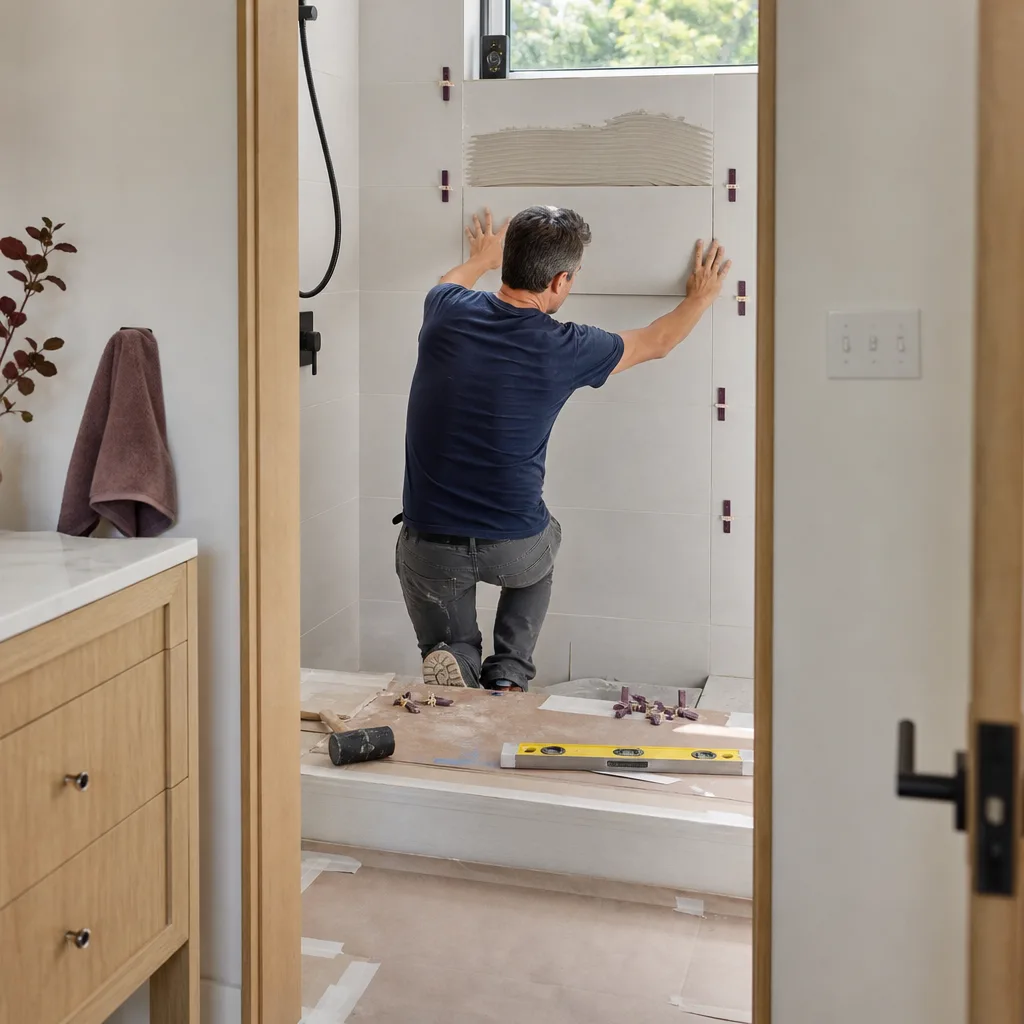
The waterproofing layer – a bonded membrane or a liquid-applied coating over cement backer board – is the most important part of a shower or tub surround, and it’s completely covered by the time the room is finished. That’s why the inspection of that layer, before tile, is where you learn whether the job is built to last or built to look finished.
A proper waterproofing inspection step has three parts:
- A photo record before the tile. Photos of the membrane in place, the seams wrapped and sealed, and the drain connection bonded, taken after the membrane cures and before a single tile is set.
- A flood test, for shower pans. The pan is filled with water and left for a set period to confirm no leakage. Ask for the start time, the check time, and a photo of the water line at both ends.
- An inspection sign-off, if the local jurisdiction requires one, plus a third-party review where the homeowner wants independent confirmation. In Hayward, a permitted bathroom remodel includes these inspections as a matter of course, and the homeowner should receive the passed inspection documentation in the record.
If a contractor tiles over the membrane without offering a photo record or a third-party inspection, that’s a documentable warning sign. It’s also the reason a documented photo record on every visit is standard on our bathroom projects – not an upgrade. The homeowner leaves with evidence of what was found and what was done, before the tile hides it. The rest of the home gets the same treatment, from Driveway & Pavers in Hayward to Fence Installation in Hayward, because the record is the product.
Hayward’s Older Housing Stock and the Asbestos Question
Hayward has a substantial amount of pre-1980 housing. In the older single-family neighborhoods and in the postwar subdivisions, bathroom floors are often laid over vinyl or sheet flooring from the 1950s, 1960s, or 1970s. Those materials, and the joint compound used in the wallboard around them, can contain asbestos. This matters because a bathroom remodel begins with demolition, and demolition is exactly when asbestos-containing material becomes a hazard – not while it’s intact on the floor, but when it’s broken up and becomes airborne.
The warning signs that suggest testing is required before demo:
- Vinyl or sheet flooring with a paper-like backing under a newer layer – the backing is the concern.
- 9-by-9 inch floor tiles in a bathroom last tiled before 1980 (the size is a common identifier, though not proof).
- Joint compound behind original wallboard in a home built before 1980, especially if the wall was patched with a textured compound.
- Any pipe insulation, ceiling texture, or duct wrap that predates 1980.
When we see these in a Hayward bathroom, we flag them at the estimate and price a testing line item before demolition is scheduled. The testing result determines the scope – if the material tests positive, it’s removed under controlled conditions before any other trade enters the room. A contractor who starts demo without addressing this is taking a risk that gets far more expensive once the material is broken and dispersed. Under the Haven Standard, no work proceeds until the testing step is approved and the change order, if needed, is signed.
In Hayward specifically, this comes up most often in homes near the older downtown blocks and in the older portions of the Foothill corridor, where original bathroom flooring is more likely to be intact. Newer construction near the shoreline is usually clear, but we still ask the build year before we write the demolition line.
What a Documented Record Looks Like at the End
The sign of a well-run bathroom remodel is the record you hold when the crew leaves. It should include:
- The original line-item estimate with written scope and flat price, signed.
- Every signed change order, referencing the original line, with the amount.
- The photo record: the substrate, the membrane, the mechanical work, the finished room.
- The passed inspection documentation for plumbing, electrical, and waterproofing.
- The written warranty term on the work, with the company’s contact for a warranty call.
This is the discipline that has kept our projects within a few percent of the agreed cost across 4,000-plus jobs. It’s not a promise that nothing will change – rot and asbestos testing change scope in almost every older Hayward bathroom. It’s a promise that the change is written, priced, and approved before it happens. For homeowners comparing estimates, ask any contractor to show you what their end-of-project record looks like. The answer tells you how they run the job.
Permits, Inspections, and Why They Matter More Than the Tile
A bathroom permit is not paperwork theater. In Hayward, the inspection checklist covers the parts of the remodel that would otherwise be invisible: the plumbing rough-in and drain slope, the electrical circuit for the vanity and exhaust fan, the exhaust fan’s ducting to the exterior, and the waterproofing. Each of those is a failure mode that shows up months after the room is finished, when the tile is set and the vanity is on. A contractor who pulls the permit lets the city inspect those stages before they vanish behind walls. A contractor who doesn’t pull it is offering a finished-looking room with an unverified interior, which is exactly the opposite of what a bathroom needs.
Ask for the permit number in writing before demolition, and make the inspection documentation part of your final record. Our second-opinion offer applies here too: bring a competitor’s estimate to us and we’ll review it line by line, at no charge, and tell you what’s missing – usually the permit line and the waterproofing inspection step. It’s a free service because a homeowner who reads an estimate carefully is a homeowner who doesn’t hit a change order surprise.
Common Mistakes to Avoid
- Accepting a lump-sum bid without line-item pricing. It looks simpler, but it makes every later change un-auditable. Ask for the breakdown and read it line by line.
- Skipping the permit to save time. A Hayward bathroom permit adds a step, not a delay that matters – and the inspection is the only chance to verify the plumbing and membrane before tile.
- Not asking who will do the tile and waterproofing. Subcontractors not named in the contract means you can’t verify the license behind the warranty you’ll need.
- Cleaning efflorescence and calling it solved. If it returns in a few weeks, the water source is still active and you’re seeing the symptom, not the cause.
- Starting demo in a pre-1980 Hayward home without testing for asbestos. Disturbing the material is the hazard; testing first keeps the cost contained.
- Tiling over a membrane without a photo record or inspection. You’ve lost the only chance to verify the most important layer in the room.
- Agreeing to a change on a handshake. If the change isn’t signed, priced, and referenced to the original line, the final price can drift with no trail.
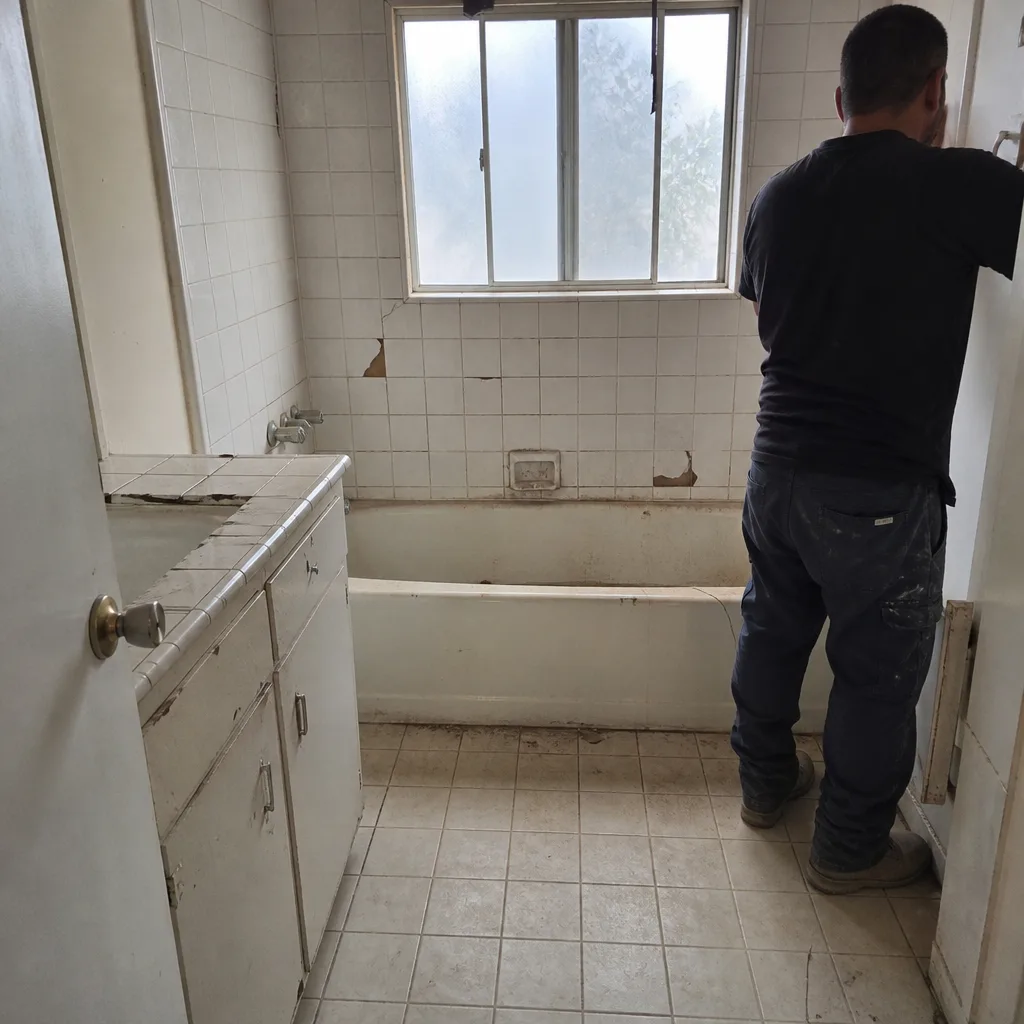
See the difference
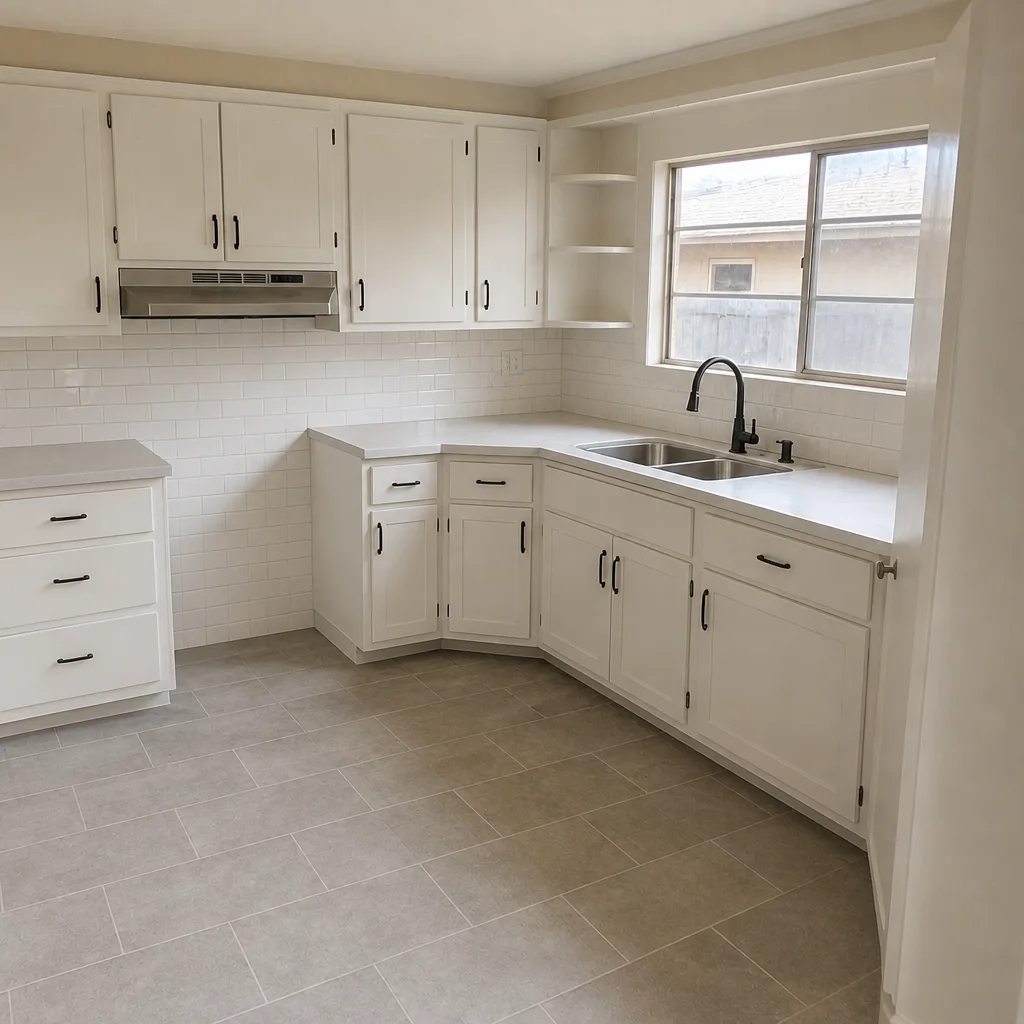
 Before
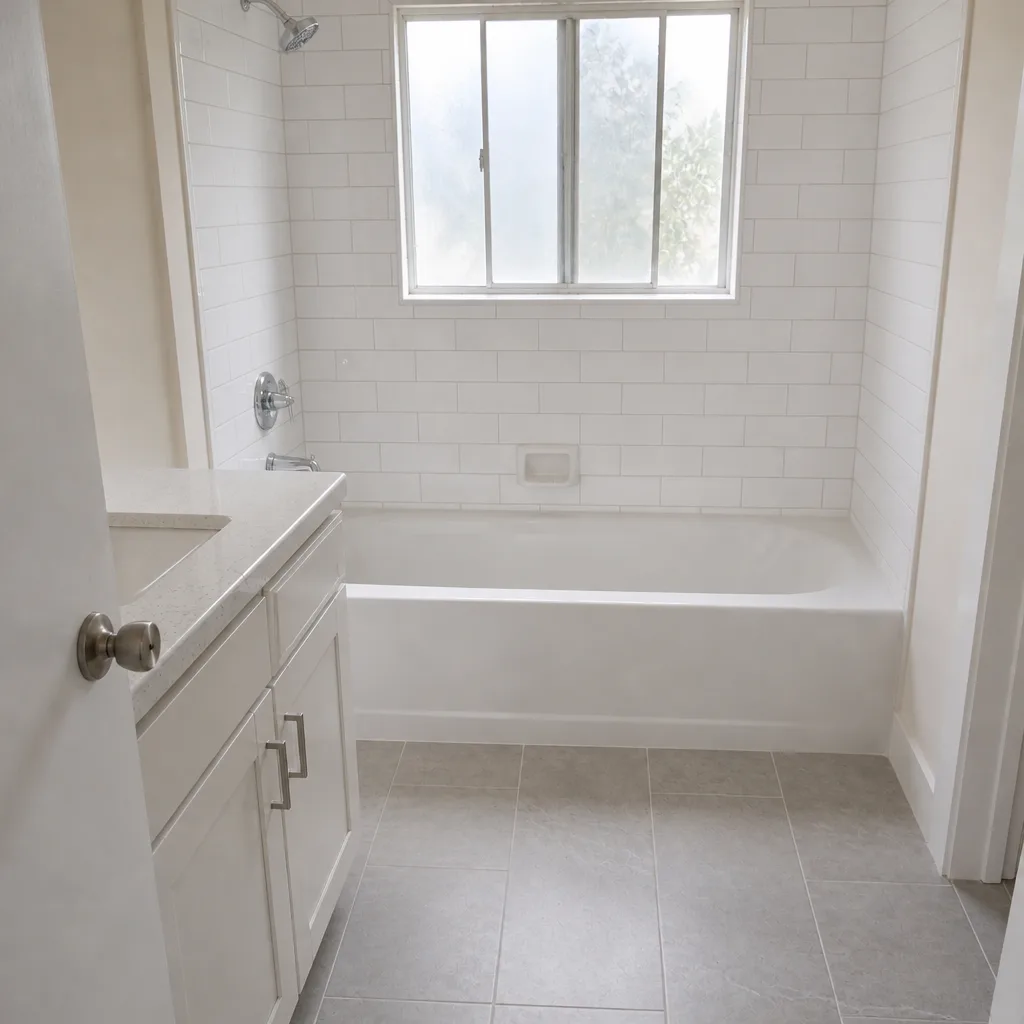 After
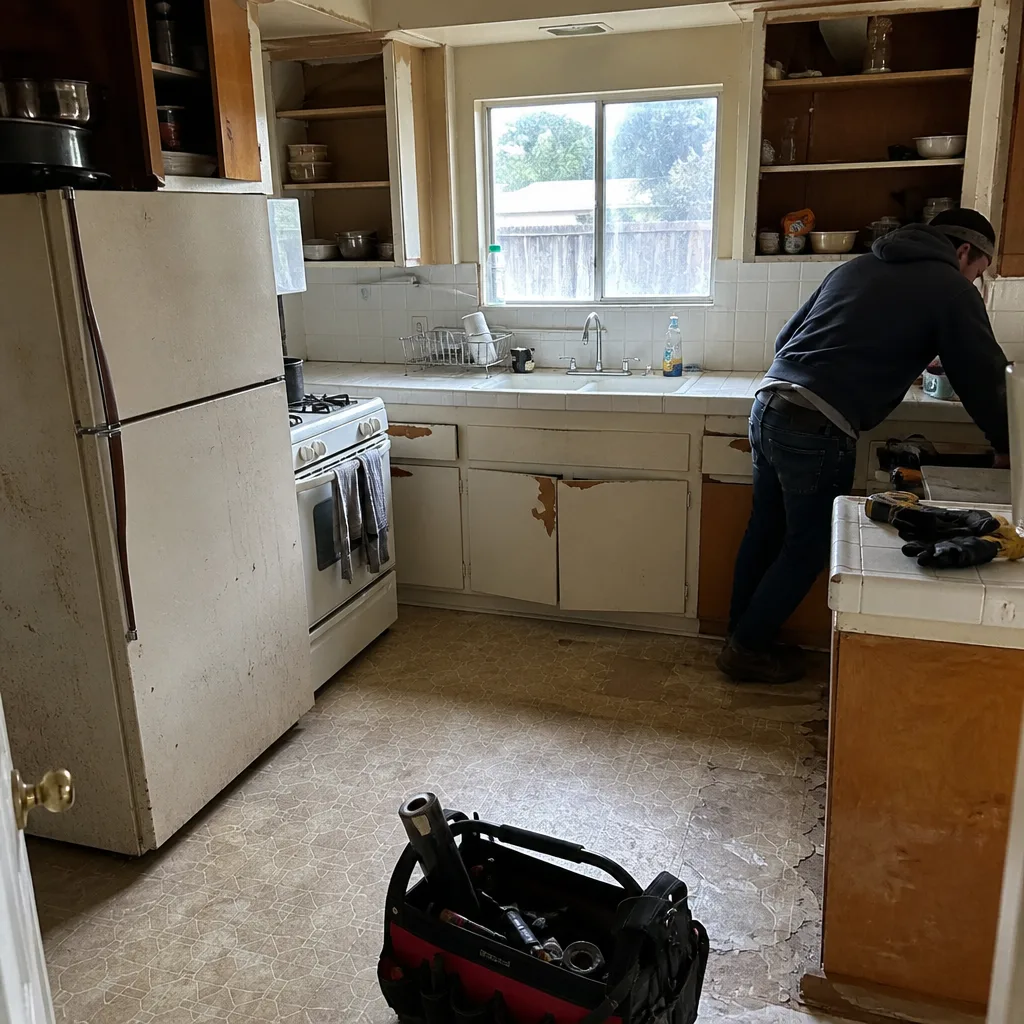 Before
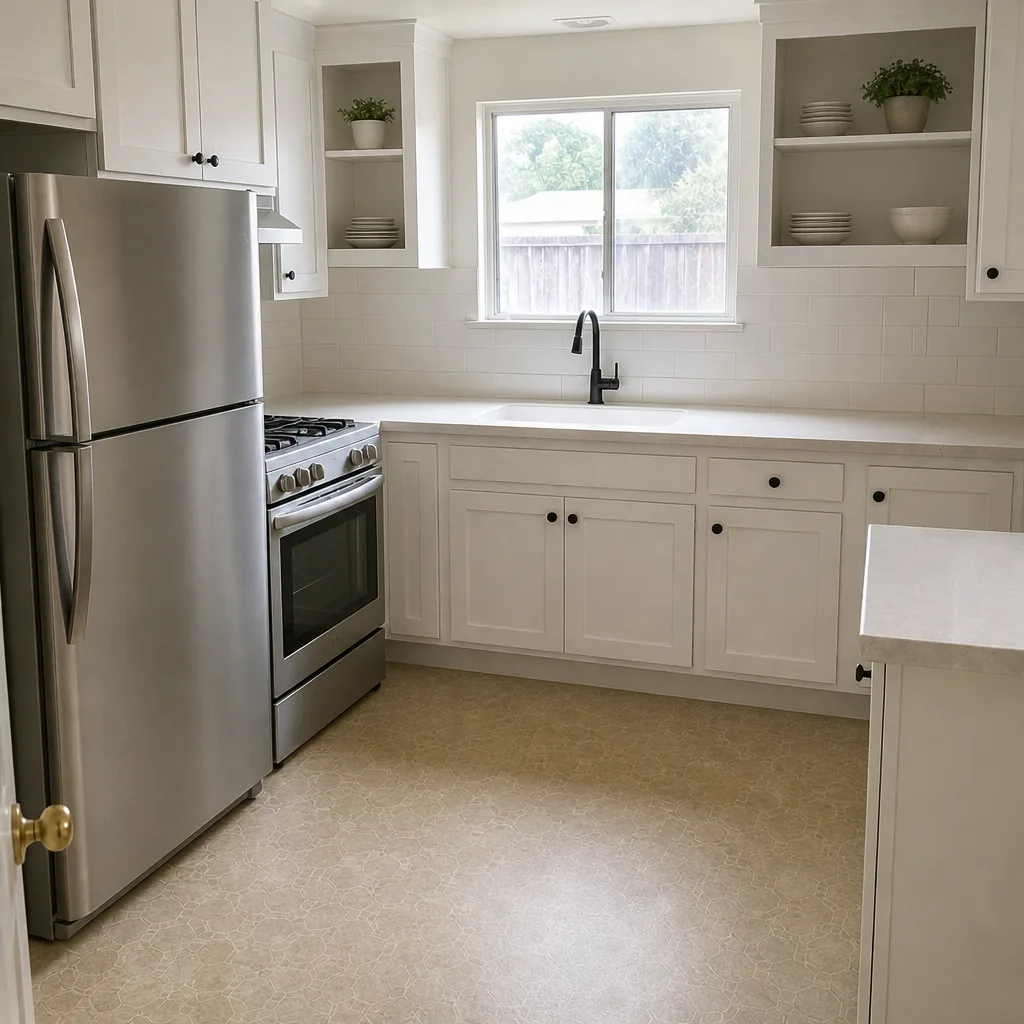 After
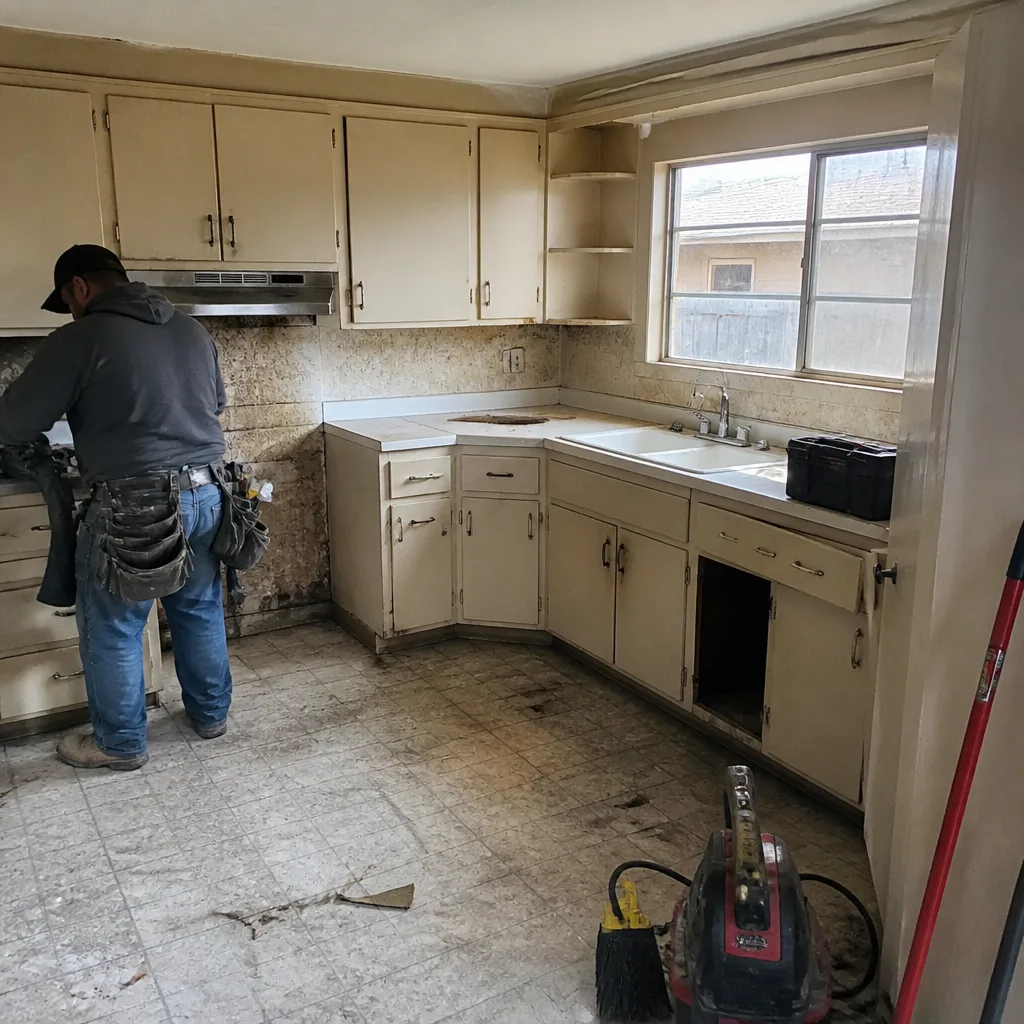 Before
 After
When to Call a Professional
Call a professional before demo if you see any of the physical signs in your existing bathroom – a springy floor around the toilet, recurring efflorescence, or ceiling paint that keeps peeling after a repaint. These point to hidden scope and aren’t fixable with a cosmetic patch. Call before you sign a lump-sum estimate, if the contractor can’t describe a written change order process, or if they won’t confirm the permit will be pulled before demolition. If you’re in a pre-1980 Hayward home with original bathroom flooring, call before the first hammer swing so the asbestos testing step gets priced into the scope rather than triggered after the material is broken. Rowan Construction Group Hayward offers free estimates in Hayward and will review a competitor’s written estimate line by line at no charge. Call (866) 863-1729 to schedule yours.
Frequently Asked Questions
A contractor who gives a scope of work without line-item pricing. Without priced lines, every later change order is unauditable, and the final price can drift well past the agreed number with no trail. Ask for the line-item breakdown before you sign anything.
Press your heel into the floor beside the toilet, next to the flange. If it gives or feels springy, the subfloor has likely taken long-term water from a leaking wax ring. Have it measured and line-item priced before demolition, not after. Call (866) 863-1729 for a free walkthrough – estimates are free.
Yes, when the work moves plumbing or electrical or replaces a shower pan, Hayward requires a permit and the corresponding inspections. The permit is your chance to have the plumbing rough-in and waterproofing verified before the tile hides them. Ask for the permit number in writing before demolition starts.
It’s efflorescence, mineral deposits left behind when water moves through the wall and evaporates at the surface. If it comes back within a few weeks of cleaning, water is still entering behind the tile, and the substrate behind the backer board is likely wet. Call (866) 863-1729 – a free estimate will tell you whether the wall needs to be opened.
If your home was built before 1980 and has original bathroom flooring (vinyl or sheet flooring, or 9-by-9 inch tile) or original joint compound, testing is required before demolition. The test result determines the removal scope, and it’s priced as a line item in the estimate. Call (866) 863-1729 to schedule the test as part of your free estimate.
They can, but you shouldn’t let them. Ask for a photo record of the membrane and drain connection before any tile is set, plus the passed inspection documentation. No photo record is a documentable warning sign, because it’s the only window you get into the most important layer in the room. Call (866) 863-1729 to see what a documented record looks like.
The Bottom Line
The warning signs of a troubled bathroom remodel are mostly procedural: a contractor who won’t put prices on paper, won’t pull the permit before demo, and can’t describe a written change order process. The physical signs matter too – springy floors, recurring efflorescence, peeling ceiling paint – because they tell you about scope before you commit. In Hayward’s pre-1980 homes, add asbestos testing before demo. Read the estimate line by line, ask who’s doing the membrane and tile, and confirm the inspection documentation is part of the final record. A homeowner who reads carefully and asks direct questions is the one who ends up with a bathroom built to last and a final price that lands within a few percent of the number they agreed to.
Call Rowan Construction Group Hayward for a Free Estimate
If you’re planning a bathroom remodel in Hayward and want a written, line-item price before anyone starts, call Rowan Construction Group Hayward at (866) 863-1729. We’ll walk the room with you, point out the physical warning signs before they turn into hidden scope, price the testing and permits as line items, and hand you a written scope and a written warranty on the same page. Our technicians have up to 19 years of experience, our crews are background-checked and uniformed, and a live person answers the phone around the clock. Bring a competitor’s estimate and we’ll review it line by line at no charge – the free second opinion is a standing offer, and the 365-Day Done Right Promise backs the work if anything needs correcting. For the broader range of projects we quote, from Home Additions & ADU in Hayward to the projects on our Rowan Construction Group Hayward home, the foundation is the same: the price is written before anyone picks up a tool.
Written by the team at Rowan Construction Group Hayward.