Last updated November 18, 2026

Free written scope consultation - allowances, timeline, and change-order rules on paper before a single trade is scheduled
DIY vs Professional Bathroom Remodeling: What’s Safe to Do Yourself
Painting a bathroom yourself saves roughly $300 to $600 and carries almost no risk. Moving a drain two feet without a permit can trigger a mandatory tear-out during a future home sale inspection, a $4,000 to $9,000 correction that lands years after the original work and after the memory of who did it has faded. That gap, not handiness, is where the real line sits. This guide draws that line task by task, with Hayward specifics on permits, moisture barriers, and what your insurance actually covers. You’ll learn which jobs save you real money and which ones quietly borrow against your home’s future value.
Quick Answer
Safe DIY tasks in a bathroom are painting, demo, swapping a faucet or toilet, and hanging a vanity, all of which carry low permit and liability exposure. Leave tile waterproofing, drain relocation, electrical work, and any plumbing rough-in to a licensed contractor, because those tasks carry permit requirements, insurance gaps, and hidden moisture-barrier failures that only surface after the tile is sealed over.
Styles & brands we work with
- Kitchen remodeling
- Bathroom remodeling
- Home additions & ADU
- Roofing
- Windows & doors
- Driveway & pavers
- Fence
Table of Contents
- The Task-by-Task Permit Table for Hayward
- What’s Genuinely Safe to Do Yourself
- The Waterproofing Membrane: Where DIY Fails Invisibly
- Hayward Permit Reality and the Sale Inspection
- The Insurance Gap Nobody Mentions
- Quantifying DIY Savings vs. the Cost of Getting It Wrong
- What a Licensed Contractor’s Documentation Package Looks Like
- Common Mistakes to Avoid
The Task-by-Task Permit Table for Hayward
The right question isn’t whether you’re handy enough to remodel a bathroom. It’s which specific tasks carry permit, insurance, or moisture-barrier consequences that compound into bigger failures. Here’s how the common bathroom tasks break down for a Hayward home, where the city’s building department follows the 2022 California Residential Code with local amendments that step up requirements for wet-area work.
| Task | Permit Required in Hayward | DIY Risk Level |
|---|---|---|
| Interior painting | No | Low |
| Faucet swap (same location) | No | Low |
| Toilet replacement (same location) | No, if drain stays in place | Low |
| Vanity replacement (same plumbing location) | No, if supply and drain are unchanged | Low to medium |
| Tile installation | No permit, but subject to waterproofing inspection if permitted | Medium |
| Waterproofing membrane | Inspected as part of a permitted shower or wet-area job | High |
| Drain relocation | Yes, plumbing permit required | High |
| Electrical (new outlets, GFCI, lighting circuit changes) | Yes, electrical permit required | High |
A permit isn’t paperwork for its own sake. In Hayward, the drain relocation permit triggers an inspection of the trap arm and venting, which is exactly the stage where a slow leak that rots a subfloor gets caught before it becomes a $9,000 fix. The tasks with no permit are also the tasks where a mistake stays visible: a bad paint line shows the day you finish it.
What’s Genuinely Safe to Do Yourself
Some bathroom tasks are worth doing yourself, in the sense that you save real money and the downside of a mistake is cosmetic. Demo, paint, and like-for-like fixture swaps sit in that group. A homeowner with basic tools and a Saturday can clear an eight-by-ten bathroom in Hayward down to studs in about a day, haul away the old vanity, and prep the room for the trades without touching anything that carries code exposure.
The safe list, with typical savings against a contractor’s quote:
- Demolition: $400 to $900 saved. Pull tile, remove the old vanity, cut out drywall to the height the plumber needs.
- Painting: $300 to $600 saved. Prime with a moisture-resistant bath primer, then two coats of a satin or semi-gloss bathroom paint.
- Faucet and showerhead swaps: $150 to $350 per fixture saved, provided the rough-in doesn’t move.
- Toilet replacement (same location): $200 to $400 saved. New wax ring, new supply line, done.
- Vanity replacement (same plumbing): $300 to $700 saved, if you shut the water at the angle stops and the drain lines up.
- Accessory installation: towel bars, mirrors, grab bars anchored into studs or with proper toggles, $100 to $250 saved.
Where to draw your personal line is a judgment call about time, not skill. If you’re remodeling a bathroom in Hayward, every weekend you spend on demo delays the plumber and electrician who’ve been scheduled, and a two-week slippage on a $20,000 job costs more than the demo savings. The best DIY work is what you can finish between the contractor’s walkthrough and the crew’s arrival.
The Waterproofing Membrane: Where DIY Fails Invisibly
The waterproofing membrane is a thin, sheet or liquid-applied barrier installed behind the tile, on the shower walls and floor, and it’s the single most consequential point of DIY failure in a bathroom. It’s invisible once the tile goes down. It isn’t correctable without a full tear-out of the shower, and it’s the one component most failed bath remodels get wrong.
In our experience, the failure pattern has three predictable shapes:
- Missing the membrane entirely. Cement board alone is not waterproof. Water vapor passes through it, hits the stud cavity, and starts feeding mold in a wall you can’t see.
- Poor seams and corners. Sheet membranes need a specific overlap at every seam and a pre-formed corner piece at every inside corner. A cut corner leaks in the first month.
- Wrong substrate and wrong product. Liquid membranes over greenboard, or cement board with no membrane at all, is a recipe for a shower that fails in year three. The right install uses a bonded membrane rated for the substrate, tested at depth.
Hayward’s mild, damp winter and occasional summer humidity matter here. A membrane that fails slowly in Palm Springs fails visibly in Hayward, because the wall cavity stays damp longer. If you’re going to do anything in the shower yourself, do the demo and leave the membrane and tile to someone whose work gets inspected. For the rest of the trade list, see our Rowan Construction Group Hayward home page for the full seven-trade scope.
Hayward Permit Reality and the Sale Inspection
Hayward’s building department requires a permit for any plumbing relocation, any new or moved electrical circuit, and any structural change to a bathroom. Cosmetic tile and paint don’t need one. Every permitted job gets an inspection sign-off at rough-in (before the walls close) and at final. Those sign-offs are the physical paper trail that a buyer’s inspector will ask for.
The sale inspection is where unpermitted work comes back with a bill attached. A buyer’s inspector sees a drain in a spot that doesn’t match the original drawings, requests the permit history from the city, finds nothing there, and the sale stalls. The correction is usually mandatory demo of whatever needs to be exposed to bring the plumbing to code, then a re-inspection. In Hayward, that runs $4,000 to $9,000 on a typical bath, and it lands years after the DIY work was done, often on a different owner who has no idea the drain was ever moved.
Two things worth knowing for a Hayward bathroom remodel permit:
- Permit fees for a residential bath remodel in Hayward typically scale with valuation and land in the $400 to $1,100 range depending on scope.
- If you hire a contractor, the permit should be pulled in the contractor’s name, and the contractor’s license number belongs on the permit record. That’s your evidence in a future inspection.
Our Bathroom Remodeling in Hayward page walks through what a permitted scope includes at each stage.
The Insurance Gap Nobody Mentions
Homeowner’s insurance policies often exclude water damage traced to unpermitted plumbing work. That sentence is worth reading twice. It means a slow leak from a DIY drain relocation, discovered six months later as a rotted subfloor and mold in the wall cavity, can be a claim your insurer denies on the grounds that the work was never inspected or permitted.
Three patterns come up repeatedly:
- Plumbing relocated without a permit. Damage traced to the unpermitted line is typically excluded. You’re paying for the mold remediation, the subfloor, and the drywall out of pocket.
- Electrical no permit, no GFCI. Outlets near water in a bathroom require ground-fault protection. An unpermitted install that trips a claim gets denied on the same basis.
- Contractor unlicensed or expired. If the person you hired doesn’t hold a current license, most policies won’t cover their work either. The cost shifts back to you.
The fix isn’t complicated: hire licensed, pull permits, keep receipts. That paper is what makes a future claim eligible. A written price before work starts, with a scope document attached, is also the evidence that the work was done by a professional under a documented agreement. Under Clause 1 of the Haven Standard, the price is written before anyone starts. Call (866) 863-1729 if you want a free second opinion on a written estimate before you sign anything.
Quantifying DIY Savings vs. the Cost of Getting It Wrong
The math on DIY is often framed as a savings question. It’s better framed as a probability question. The safe tasks save you a known, modest amount. The consequential tasks save a similar amount but carry a low-probability, high-cost tail that dwarfs the savings when it lands.
| Category | Typical DIY Savings | Typical Correction Cost |
|---|---|---|
| Demo and hauling | $400 to $900 | Near zero; visible the day it’s done |
| Painting | $300 to $600 | Near zero; you repaint |
| Fixture swaps (like-for-like) | $150 to $700 per item | $200 to $600 if you need a plumber to fix a leak |
| Tile install | $1,200 to $2,500 | $3,000 to $7,000 to redo a failing shower |
| Waterproofing membrane | $400 to $900 | $5,000 to $9,000 full shower demo, mold remediation, rebuild |
| Drain relocation | $300 to $800 | $4,000 to $9,000 if caught at sale inspection |
| Electrical (new circuits, GFCI) | $250 to $600 | $1,500 to $4,000 to re-open walls and re-do the circuit |
Read the table this way: the safe tasks put real money back in your account with almost no risk. The consequential tasks save less than the correction costs on the day it goes wrong, and the correction arrives on the timeline of a future inspection, not the timeline of your remodel. That’s the asymmetry. When you’re ready to price the trade work, our Driveway & Pavers in Hayward guide shows the same written-price discipline applied to the exterior of the home, which is a useful comparison for how a contractor’s quote should look.
What a Licensed Contractor’s Documentation Package Looks Like
A licensed contractor’s work produces a paper trail. That package is worth knowing by name because it’s the thing a buyer’s inspector will ask to see, and the thing your insurer will request if a claim comes up. A well-run bathroom job in Hayward delivers five documents, usually before the first tile is set.
- The permit record. A copy of the city permit in the contractor’s name, pulled against the property address. This is the city’s own record that the plumbing, electrical, and structural scope of the bathroom remodel was inspected.
- The written scope and flat price. A line-item scope with a written price and a written warranty attached. Not a verbal estimate. This is what makes the job comparable to another contractor’s bid.
- Signed change orders. No work proceeds on a change until the change order is signed. If the contractor finds dry rot behind the vanity, the price for opening and repairing it gets written and signed before the saw comes out of the truck. That’s why projects finish within a few percent of the number the customer agreed to.
- Inspection sign-off cards. Rough-in inspection signed off before walls close; final inspection signed off at completion. These are physical, and they follow the house.
- Lien waivers from material suppliers and subcontractors. A lien waiver from the tile supplier and the plumber is your proof that nobody downstream can place a claim against the property. Buyers’ escrow officers request these at closing on a recently remodeled home.
Our crews are background-checked and uniformed, and every visit includes a documented photo record as standard, which becomes part of that package. If you’re extending the house to add a bathroom rather than remodeling an existing one, see Home Additions & ADU in Hayward for how the same documentation discipline applies to an addition.
Common Mistakes to Avoid
- Laying tile on cement board with no membrane. Cement board is water-resistant, not waterproof. Without the membrane the shower fails in year three, and the fix is the entire shower.
- Moving a drain without a permit to “keep it simple.” A buyer’s inspector in Hayward will find it. The correction is a mandatory demo and re-inspection that runs $4,000 to $9,000.
- Assuming your policy covers the leak. Many homeowner’s policies exclude water damage from unpermitted plumbing, and that exclusion is the expensive one.
- Hiring a handyman for electrical. Bathroom circuits need ground-fault protection, and a handyman can’t pull the permit. The wire is safe the day it’s done, not safe the day you sell.
- Demoing before the contractor has walked the room. Hidden rot or a surprise cast-iron drain changes the scope and the price. Get the walkthrough first, then swing the hammer.
- Buying a pre-fab vanity online without measuring rough-in. A vanity that doesn’t align with the existing drain adds a plumbing relocation to your “safe DIY” list and turns it into a permit job.
- Not keeping the receipts and the permit copy. At resale in Hayward, a bathroom remodel without paperwork looks like a bathroom remodel without paperwork to a buyer’s lender.
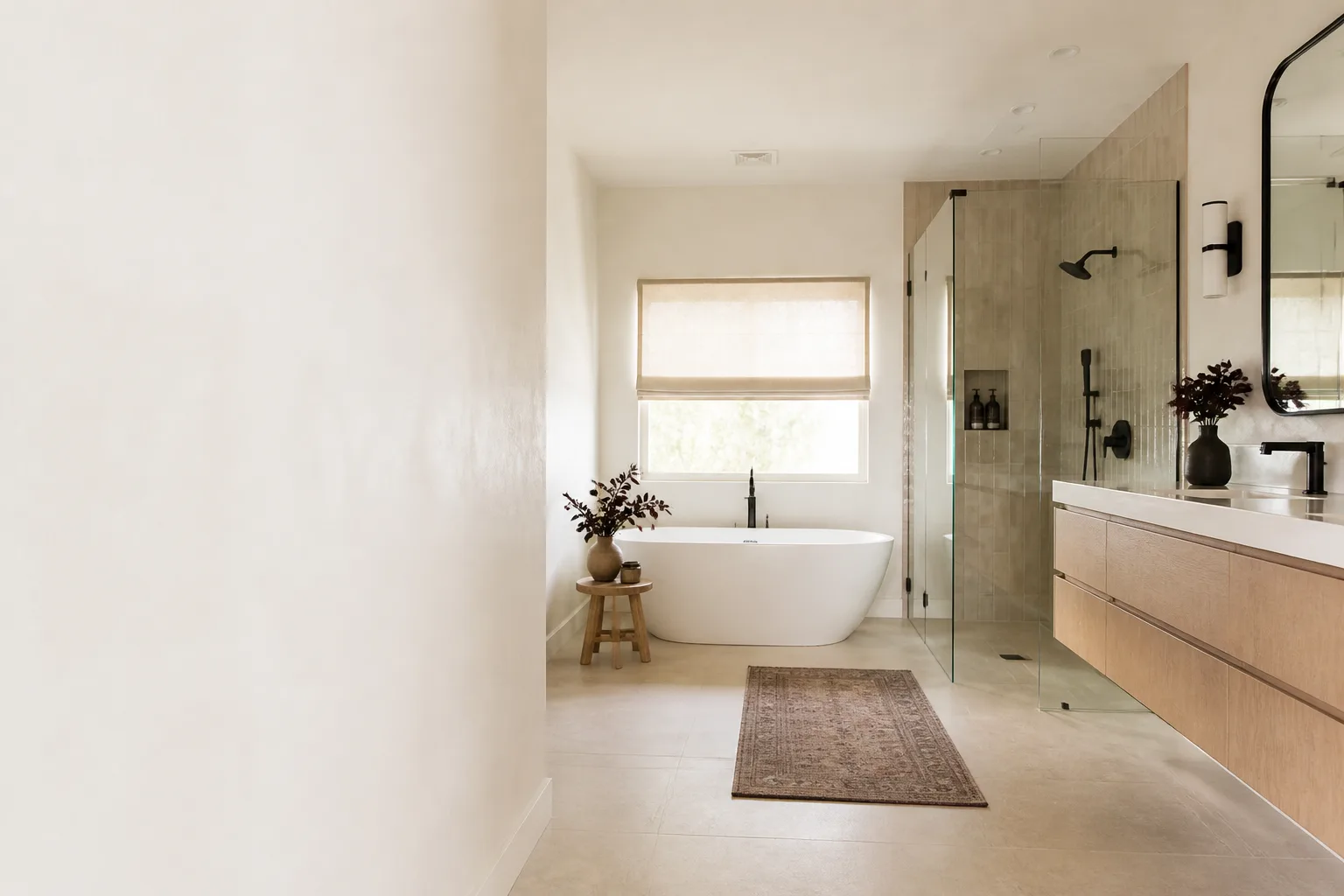
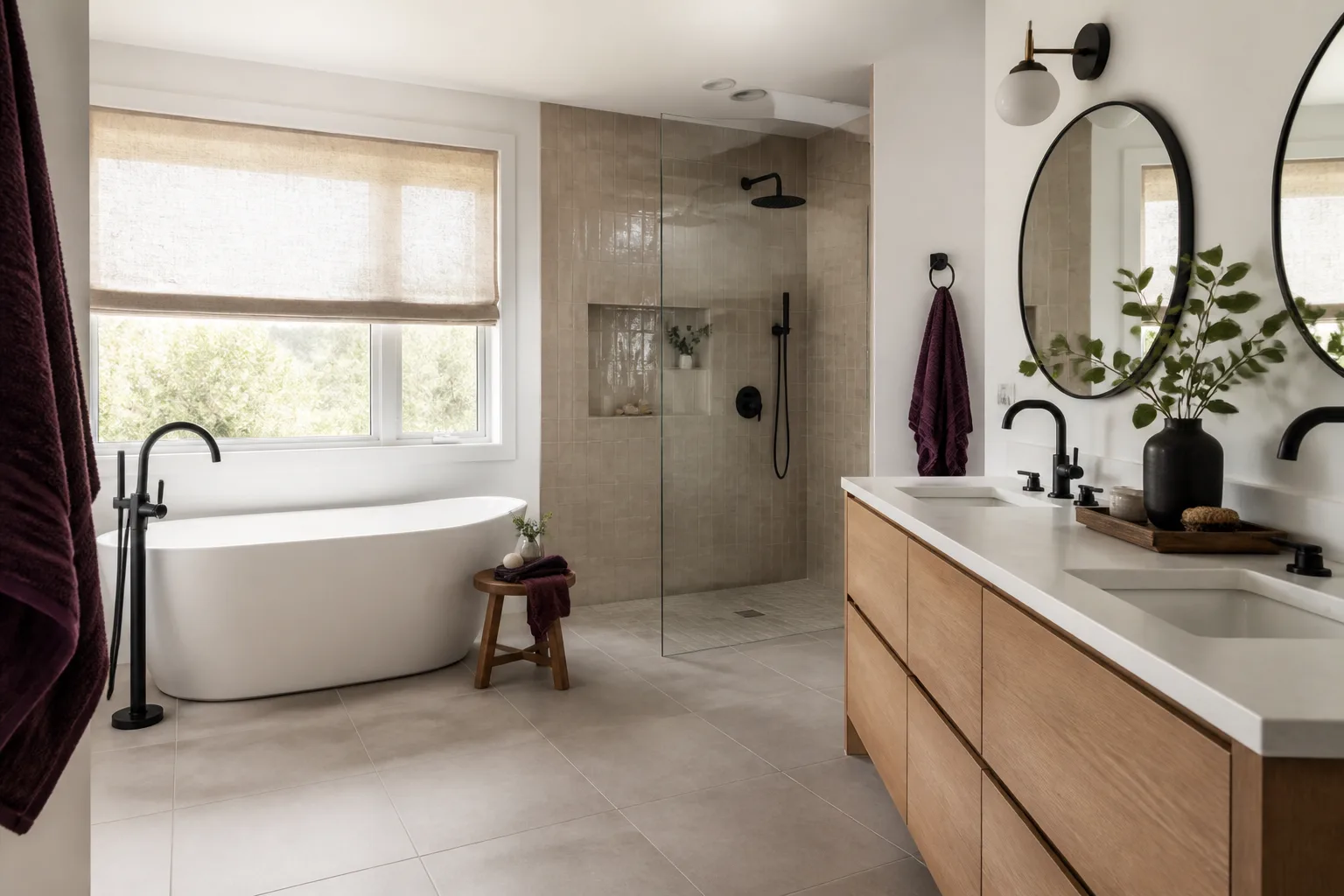
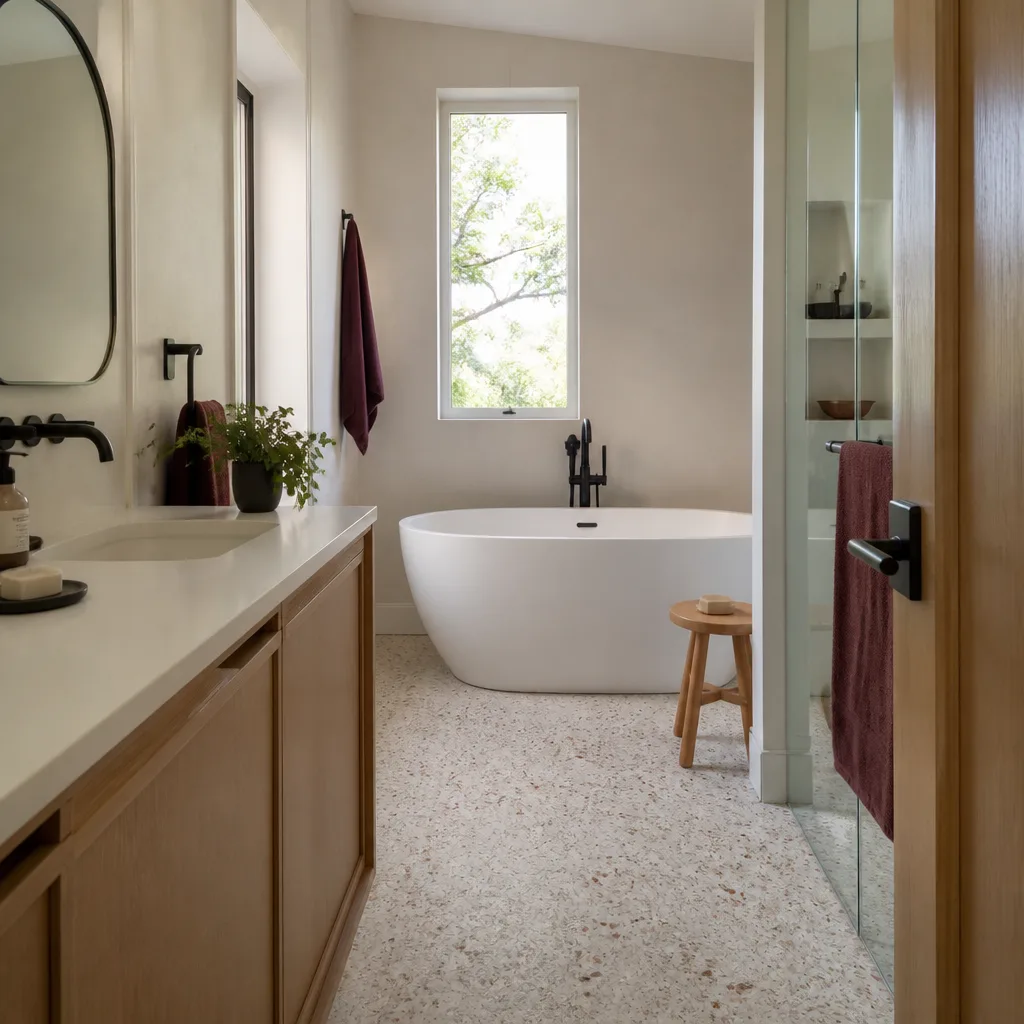
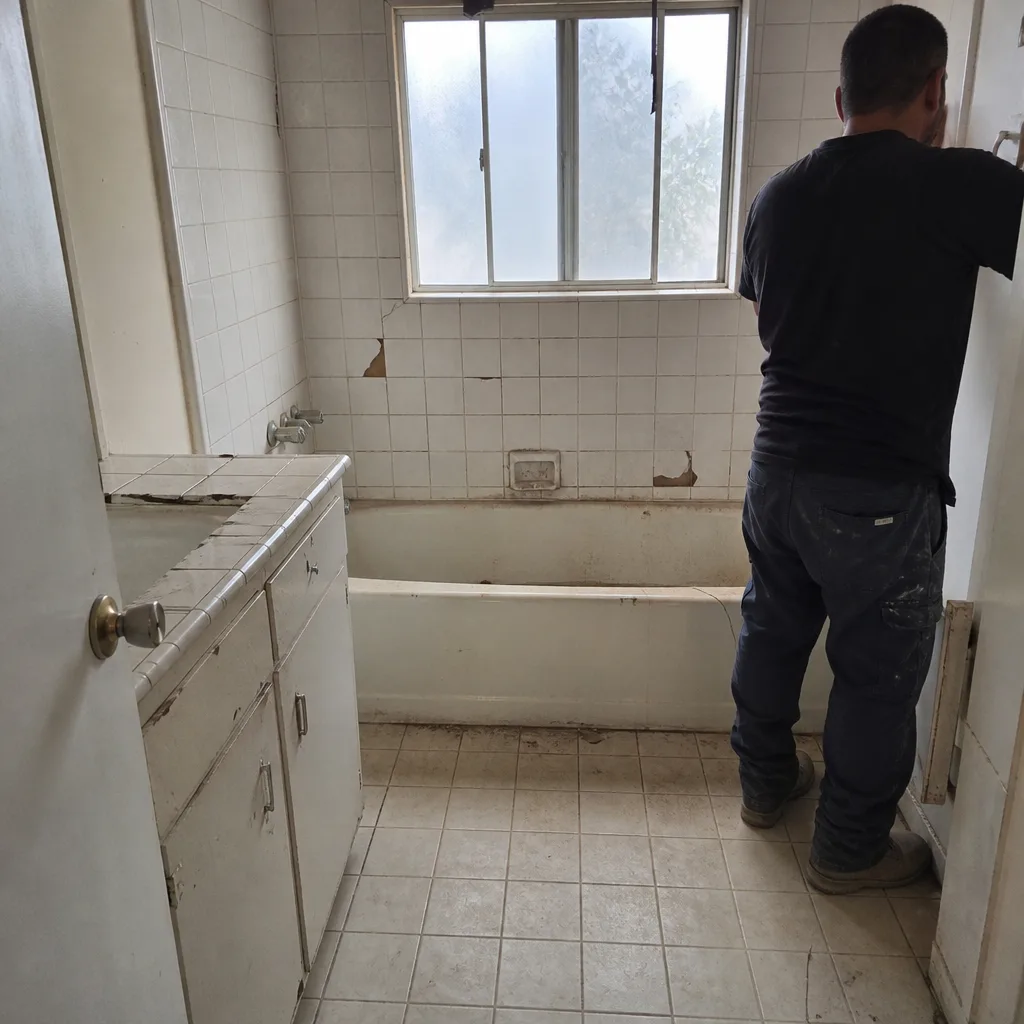
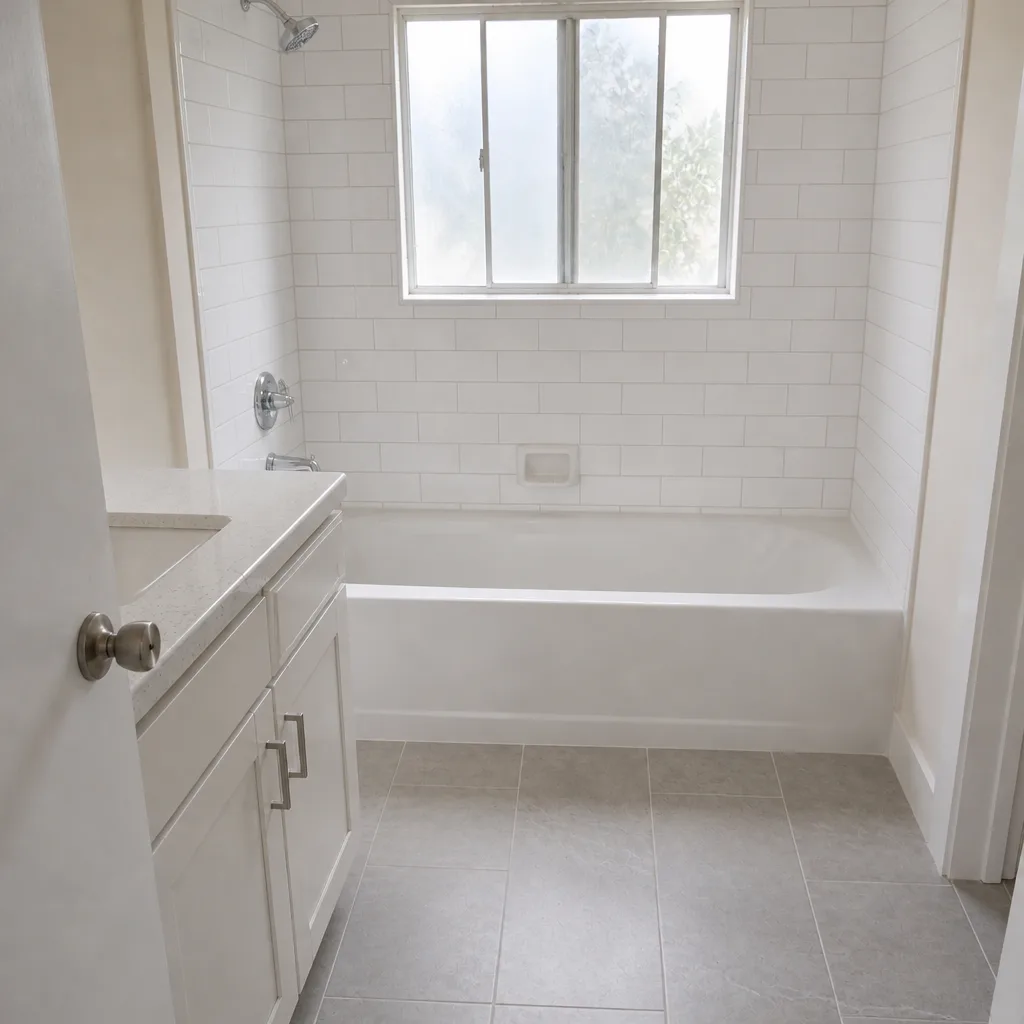
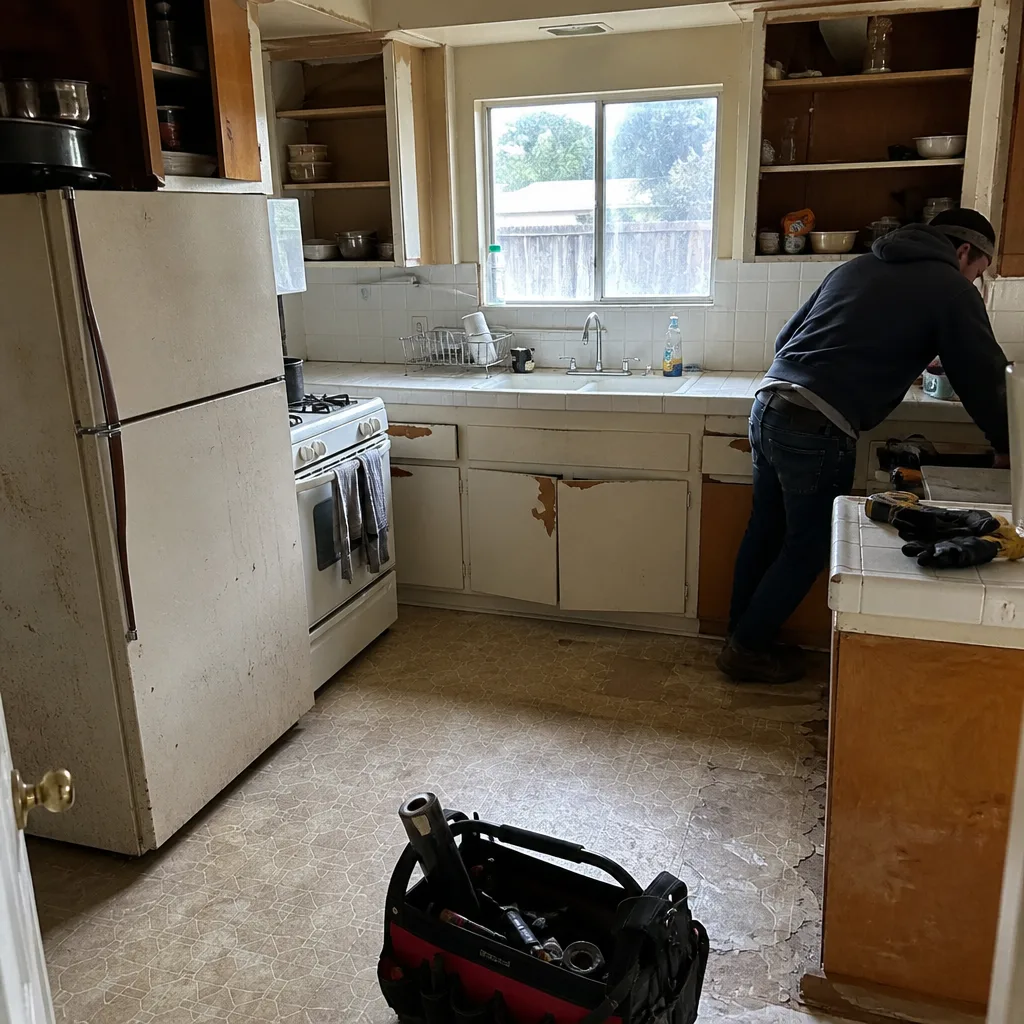
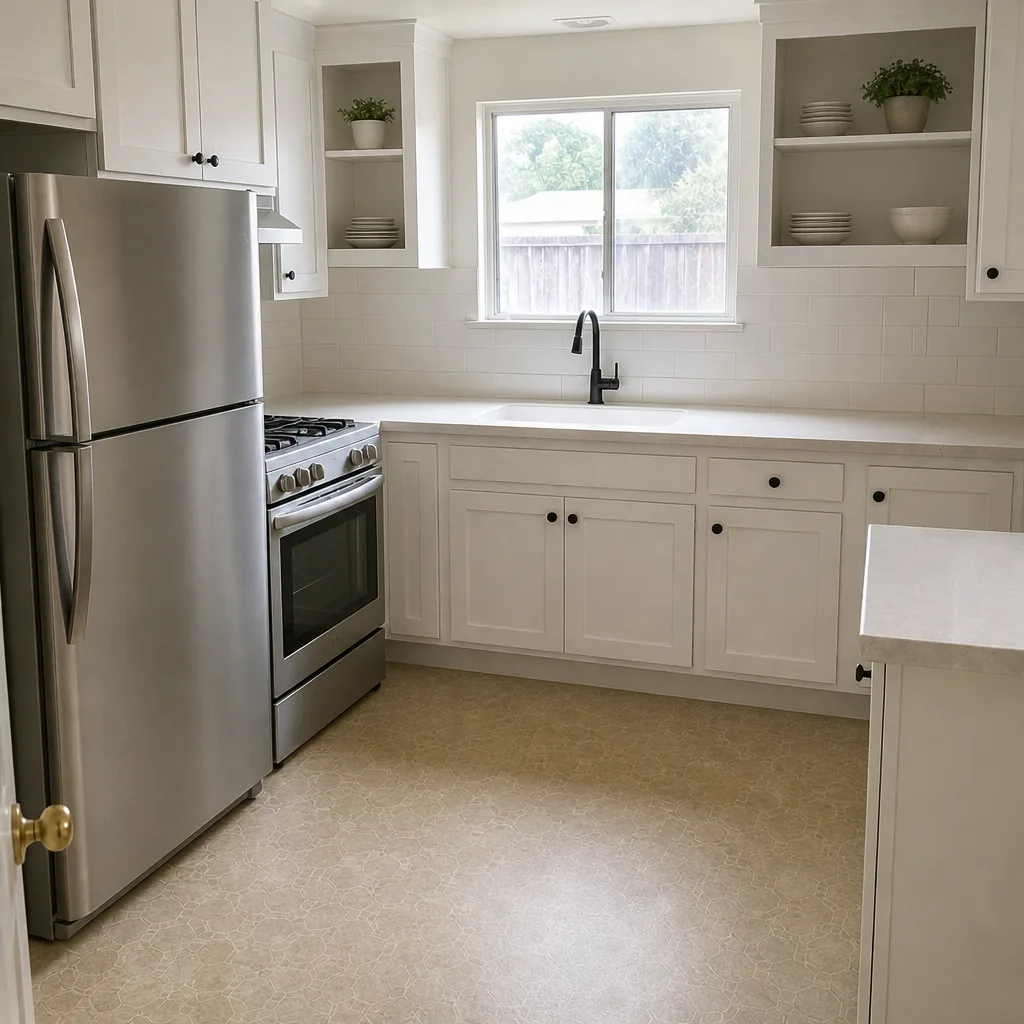
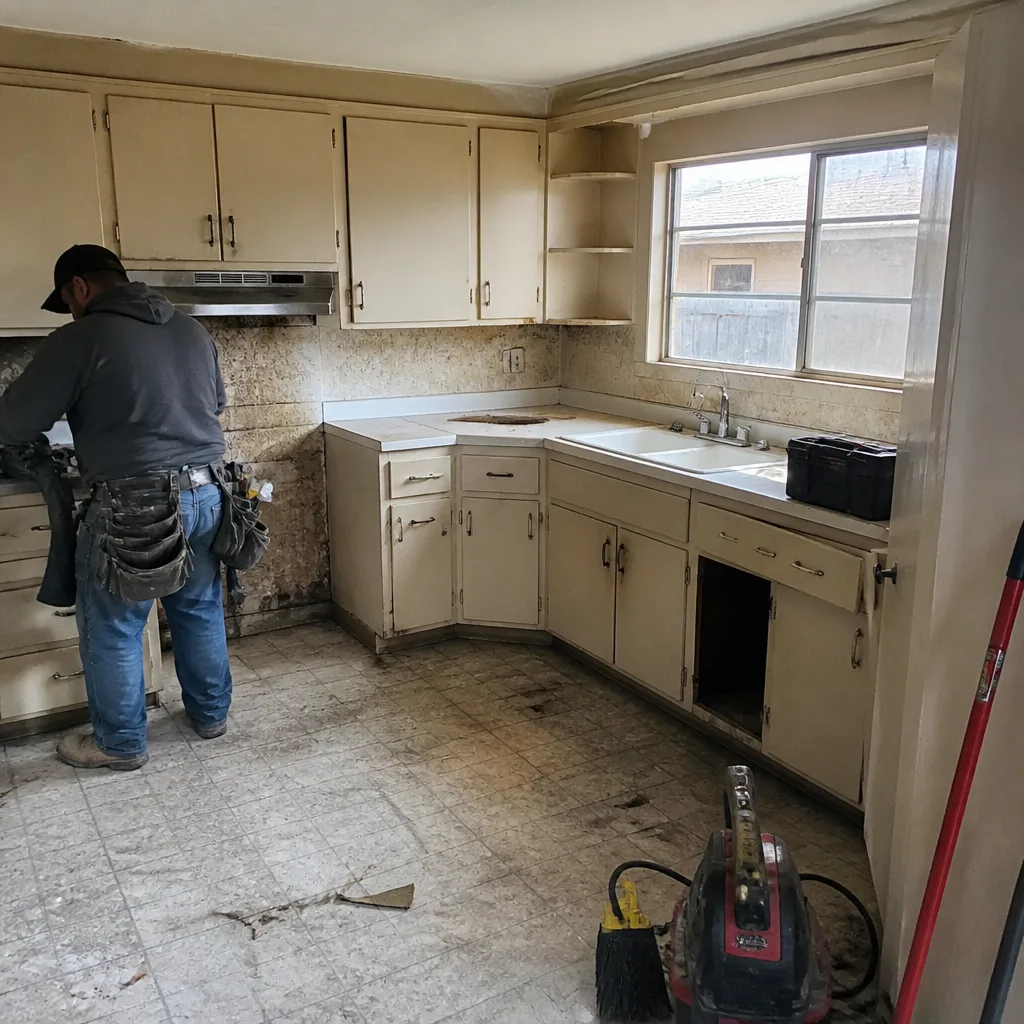
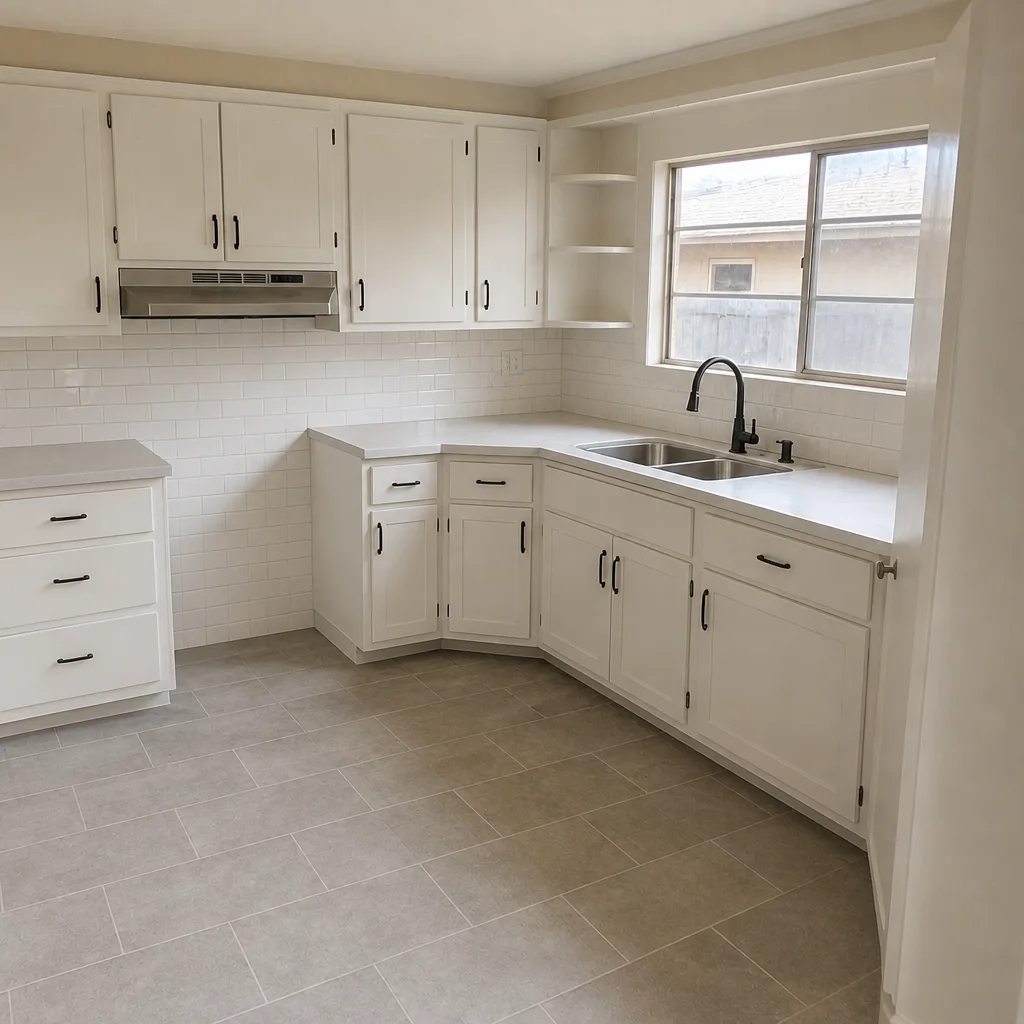
See the difference
 Before
 After
 Before
 After
 Before
 After
When to Call a Professional
Call a licensed contractor when the task touches the plumbing rough-in, the electrical circuit, the shower waterproofing, or any structural change. Also call when scope is uncertain and the demo could uncover hidden conditions the DIY plan doesn’t cover, because that’s when a written scope and a signed change order protect you from surprise cost overruns. If you’re extending the property line with a new fence, our Fence Installation in Hayward page covers the outdoor equivalent of the same question: what to build yourself and what to hand to a licensed crew. Rowan Construction Group Hayward offers free estimates in Hayward; call (866) 863-1729 to schedule yours, and bring any written estimate for a line-by-line second opinion at no charge.
Frequently Asked Questions
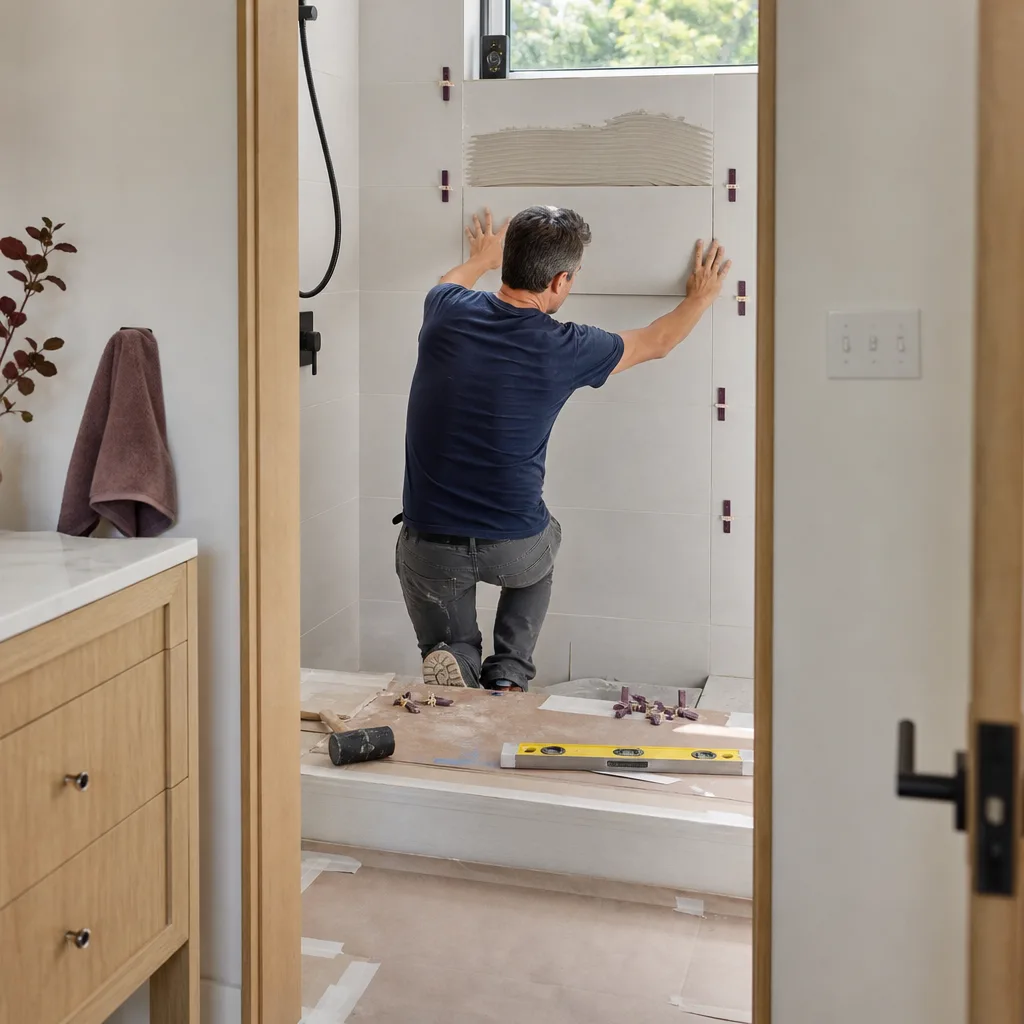
The waterproofing membrane behind the shower tile. It’s invisible once the tile goes down, and a failure can’t be fixed without a full demo of the shower, running $5,000 to $9,000 to correct. Call (866) 863-1729 for an exact quote on a membrane and tile install; estimates are free.
Not if the vanity goes in the same spot with the same plumbing supply and drain rough-in. If you’re moving the drain or adding an outlet, Hayward requires a plumbing or electrical permit, and the inspection is the moment a slow leak or a wiring fault gets caught before walls close.
Yes, if a buyer’s inspection finds the drain in a location that doesn’t match the city’s permit record. The typical correction is a mandatory demo of whatever needs to be exposed, then a re-inspection, and it usually happens years after the original work. Call (866) 863-1729 before you move a drain.
Usually not if the plumbing was done without a permit. Many policies exclude water damage traced to unpermitted plumbing work, which means the mold remediation, subfloor replacement, and drywall come out of your pocket. Keep the permit and the contractor’s receipts; they’re what makes a future claim eligible.
Demo, painting, like-for-like faucet and toilet swaps, and vanity replacement save roughly $300 to $2,500 combined, with almost no risk. Tile and waterproofing save a similar amount but carry a $5,000 to $9,000 correction if they fail. Call (866) 863-1729 to price the tile work separately from the DIY scope.
The permit record, inspection sign-off cards, the written scope and flat price, any signed change orders, and lien waivers from material suppliers and subcontractors. Ask for all five. Under the Haven Standard, our projects deliver these as a matter of course, and a free second opinion on any competitor’s estimate will show you how the paperwork should read before you sign.
The Bottom Line
The line between safe DIY and a professional call isn’t about skill. It’s about which tasks carry permit, insurance, or moisture-barrier consequences that show up years later. Paint, demo, and like-for-like fixture swaps save you $300 to $2,500 with almost no risk. Waterproofing, drain relocation, and electrical work save less than they cost when they fail, and the correction runs $4,000 to $9,000 on a future inspection. If you’re remodeling a bathroom in Hayward and want a written price on the consequential scope before anyone picks up a tool, call (866) 863-1729 for a free estimate. Every quote is a written price with a written scope, no work on a change until the change order is signed, and the 365-Day Done Right Promise printed on every page.
Written by the team at Rowan Construction Group Hayward.