
Last updated November 18, 2026








Free written scope consultation - allowances, timeline, and change-order rules on paper before a single trade is scheduled
Bathroom Remodeling Maintenance Schedule: What to Do and When
Grout and caulk joints in a tile shower are consumable parts. They’re designed to be cut out and replaced every 3 to 5 years, the same way you’d replace a furnace filter or a smoke detector battery. Yet in our experience, fewer than one in ten remodel contractors hands the homeowner a written schedule at job completion explaining that. The result is predictable: a $4 tube of silicone goes unspent, water gets behind the tile, and a $14,000 shower becomes a $4,000 repair. This guide gives you the calendar most Hayward homeowners never receive – a month-by-month, task-specific schedule tied to the actual materials and systems in your bathroom, from the exhaust fan in the ceiling to the cartridge inside your shower valve.
Quick Answer
A finished bathroom needs four maintenance intervals: a 30-day check of caulk lines, drain flow, and fan operation; a 6-month cleaning of the shower door track and a flush of the valve cartridge; an annual reseal of grout and a full inspection of the wet zone; and a 5-year replacement of all caulk joints plus a re-grout review. Skip the small tasks and the large ones arrive early, usually with mold or water damage attached. Call (866) 863-1729 for a free estimate if anything on this schedule is already overdue.
Styles & brands we work with
- Kitchen remodeling
- Bathroom remodeling
- Home additions & ADU
- Roofing
- Windows & doors
- Driveway & pavers
- Fence
Table of Contents
- Why a Remodel Needs a Maintenance Schedule at All
- The 30-Day Snapshot: What to Check in Your First Month
- The 6-Month Service: Cartridge Flush and Door Track
- The Annual Wet-Zone Inspection and Grout Reseal
- The 5-Year Reset: Caulk Replacement and Grout Review
- How Your Exhaust Fan CFM Affects Mold Timelines
- Which Skipped Tasks Void Manufacturer Warranties
- Hayward-Specific Maintenance Notes
Why a Remodel Needs a Maintenance Schedule at All
A bathroom is the only room in a house where water, steam, soap scum, and human traffic meet in the same 40 square feet, every day, for years. That combination wears materials in a specific order. Silicone caulk at the wall-to-floor joint flexes every time someone steps into the shower pan. Grout in the wall corners holds rigid until the framing behind it moves a fraction of an inch with seasonal humidity. The valve cartridge inside your shower mixer cycles hot and cold thousands of times a year and slowly mineralizes.
None of this is a defect. It’s the natural wear path of a wet room, and it’s entirely predictable. A written schedule converts that wear from a surprise into a routine – and routine maintenance is the difference between a bathroom that lasts 25 years and one that needs a second remodel in 12.
Here in Hayward, the specific failure pattern is water intrusion at the caulk joints, and it moves fast. We’ve seen a hairline gap at the shower pan corner open into a soft subfloor within two wet seasons. In the Hayward hills – the neighborhoods above CSU East Bay and up toward Fairview – the interior humidity swings more than the flats, and the caulk joints take the stress. Down in the flats near B Street, homes are older and often have the original cast-iron drain lines, which brings a separate set of maintenance tasks around drain flow and cartridge mineral buildup. If you’re planning an upgrade before the calendar starts, our Rowan Construction Group Hayward home page lays out how we quote a full bathroom remodel with a written price before work begins.
The 30-Day Snapshot: What to Check in Your First Month
The first 30 days after a remodel are the settling-in month. Materials expand, sealants finish curing, and any installation issue declares itself early. Walk through these checks once, at day 30, and write down what you find:
- Run your finger along every caulk joint – shower pan perimeter, tub surround, backsplash to wall, vanity to wall. You’re feeling for gaps, soft spots, or caulk that has pulled away from the surface. A healthy joint is continuous and slightly flexible.
- Test the exhaust fan with a tissue – hold a square of toilet paper near the grille with the fan running. If it doesn’t stay suctioned to the grille, the fan is pulling less than it should.
- Check the drain flow – time how long the sink takes to empty. Slow drainage in the first month points to construction debris in the trap, which is common after a remodel and easy to clear before it clogs fully.
- Look for water stains on the ceiling below – if your bathroom sits above another room, a first-month stain is a red flag worth a call.
- Confirm the fan timer or humidistat works – if you have one, cycle it and make sure it actually shuts the fan off.
Document what you find. Photograph anything that looks off. If you had your bathroom remodeled through Rowan Construction Group Hayward, that documented photo record lands on your end of the job – and under the 365-Day Done Right Promise, anything installed wrong gets made right. The 30-day check is the moment to catch a fault while the fix is small.
The 6-Month Service: Cartridge Flush and Door Track
Two tasks cause the majority of post-remodel service calls, and almost no homeowner is told to do either.
Flush the shower valve cartridge
Inside your shower mixer sits a cartridge – the brass and ceramic part that regulates hot and cold water. Over time, mineral deposits and sediment from the supply line collect inside it, and the symptoms arrive quietly: the water temperature drifts, the handle gets stiff, or the shower runs lukewarm even with the water heater set high. A 6-month flush clears the buildup before it hardens. In Hayward, where water runs moderately hard, we see cartridge mineral scale move faster than in coastal cities with softer water supplies. Flushing is not a job you do yourself – you’d need to isolate the supply line and remove the trim – but a professional or your remodeler can do it in under an hour. Kohler and Toto cartridges, both brands we specify, come with service documentation and are designed to be serviced rather than replaced.
Clean the shower door track
A glass shower enclosure sits on a bottom track that collects soap scum, hair, and calcium. Left alone, that debris hardens into a rock and eventually pits the track finish or causes the door to derail. A 6-month cleaning with a soft brush and a mild vinegar solution keeps it clear. Don’t use a metal scraper – it scratches the anodized finish. If your enclosure uses a frameless glass panel with a rubber seal, wipe the seal dry after each shower to prevent black mold from colonizing the underside. That half-second habit saves hours later.
This 6-month service isn’t glamorous. But the shower door track and the valve cartridge are exactly where a Hayward bathroom remodel will fail first if nobody touches them, and both fixes cost a fraction of what a full replacement would run. When your enclosure is from a brand with a real service line, keep the product literature. It names the parts and the schedule.
The Annual Wet-Zone Inspection and Grout Reseal
Once a year, the bathroom gets a full inspection and a grout reseal. This is the highest-value hour you’ll spend on the room.
- Inspect all grout lines – run a flashlight beam across the tile at a low angle. Shadow lines that don’t shift as you move the light mean grout is intact. Any line that looks dark, crumbly, or has visible pinholes needs attention.
- Reapply penetrating grout sealer – sealer is not the shiny coating on top; it soaks into the grout’s pores and blocks water intrusion. A penetrating sealer on a shower floor takes 20 minutes to apply and a few hours to cure. Do it annually, and you’ll never need to regrout the shower for years.
- Check every caulk joint – a silicone caulk joint has a 3 to 5 year life. At year one, most are still good, but inspect for hairline separation at the shower pan corners and the tub surround.
- Test the fan – repeat the tissue test, and clean the fan grille and impeller. A clogged fan loses airflow, which is the topic of a section below.
- Look at the floor at the toilet base – if the wax ring has failed, water shows up as a stain or soft spot at the base. That’s a small fix, but only if you catch it early.
- Wipe down the grout in the shower with a pH-neutral cleaner – avoid harsh acidic cleaners on grout; they eat the sealer you just applied.
If a joint is cracked or a grout line is crumbling, call a professional rather than spot-patching. A failed caulk joint is a defect; a working the calendar correctly catches it early. If you’re considering more than maintenance – a full re-tile or a fixture refresh – our Bathroom Remodeling in Hayward page walks through the written scope and flat pricing you can expect. For homeowners doing broader work around the house, our guide to Driveway & Pavers in Hayward covers a separate exterior maintenance calendar worth keeping.
The 5-Year Reset: Caulk Replacement and Grout Review
At year five, every caulk joint in the bathroom gets cut out and replaced – not touched up. This is not a sign anything failed. Silicone caulk is a consumable, and its adhesion degrades with every thermal cycle. A 5-year replacement schedule is the correct long-term posture.
- Cut out all caulk – use a plastic scraper and a utility knife. Don’t gouge the tile or the acrylic surround.
- Clean and dry the joint – silicone won’t stick to a damp or dusty surface. Let the joint dry fully, which can take a day in a humid bathroom.
- Apply fresh 100% silicone caulk – not paintable acrylic, which will crack in a wet room. Match the color if you want it invisible; translucent is fine for most joints.
- Reseal all grout and inspect for regrouting – if a section of grout is crumbling or has fallen out, regrouting the affected area is the right call. If more than 10% of the shower floor grout is compromised, consider a professional regrout.
- Inspect the shower pan and the subfloor around the toilet – look for soft spots or discoloration. This is also the moment to check the toilet flange and wax ring.
- Have the valve cartridge serviced – at year five, a professional can re-lubricate or replace the cartridge if you’re seeing temperature drift or stiffness.
A 5-year cycle like this is where the maintenance record pays off. If you sell the home, a documented maintenance log with photos and receipts shows a buyer the bathroom was cared for – and it’s the same evidence a home inspector looks for. For Hayward homes on the flats with older plumbing, the 5-year reset often coincides with a bigger infrastructure question: is the drain line still cast iron? If so, budget for a camera inspection at year five. If you’re planning an addition that adds a bathroom, our Home Additions & ADU in Hayward page covers how maintenance expectations change when you add a wet room.
How Your Exhaust Fan CFM Affects Mold Timelines
Your bathroom exhaust fan is the single most important maintenance item in the room, and it’s the one most homeowners ignore. A fan is rated in CFM – cubic feet per minute – which is simply how much air it moves. The standard formula is one CFM per square foot of bathroom floor plus 50. A 40-square-foot bathroom needs a fan rated at 90 CFM. An undersized fan, or a correctly sized fan with a clogged grille, moves less air than the room needs, and the result is measurable: moisture lingers on walls after a shower, grout stays damp, and mold colonizes sooner.
The practical effect is that an undersized fan accelerates grout and paint failure. Paint on the ceiling will blister and peel at a faster rate, and the grout in your shower will absorb more moisture in the same interval. If you’ve noticed the mirror fogging for more than a few minutes after a shower, the fan is the first thing to check.
A few things you can do without a professional:
- Clean the fan grille and the impeller with a vacuum every six months. Dust buildup is the most common cause of lost airflow.
- Run the fan for 20 minutes after every shower – not just while the water is running. Humidity stays in the room after the shower ends.
- Check that the fan exhausts outdoors, not into the attic. If the duct is disconnected or venting into an attic, no amount of fan running will help. This is a job for a contractor; we’ve found disconnected ducts in plenty of Hayward homes.
If your fan is older than 10 years or you can’t find its CFM rating, replacing it with a modern, correctly sized unit is often the highest-value maintenance upgrade in the room. Our crews have up to 19 years of experience with bathroom ventilation, and we quote a fan replacement with a written price before anyone starts.
Which Skipped Tasks Void Manufacturer Warranties
This is where maintenance stops being optional. Every major product in your bathroom carries a manufacturer warranty, and those warranties have conditions. Skip the conditions, and the warranty becomes a piece of paper.
- Tile and grout – most tile manufacturers require that grout be sealed per the product instructions and that the installation follow the setting material’s specifications. A sealed grout line is a warranty requirement for many porcelain and ceramic tile lines. If the grout fails and it was never sealed, the claim gets denied.
- Shower enclosures – glass and frame manufacturers typically require that the track and seals be cleaned and maintained per instructions. A pitted or corroded track from skipped cleaning is considered neglect, not a defect.
- Fixtures (faucets, shower valves) – Kohler and Toto, for example, require that the fixture be installed per code and that sediment be flushed. A cartridge that failed because it was never flushed after installation can be denied as improper maintenance.
- Vanities and cabinets – a solid wood or plywood vanity needs the bathroom to stay within reasonable humidity. An undersized fan that lets humidity climb can void a cabinetry finish warranty.
Keep your documentation. The sales receipt, the written scope, the photo record from the installation, and the product manuals all belong in a folder – paper or digital. If you sell the house, that folder is the evidence a buyer’s inspector will use to judge whether the bathroom was cared for. The same discipline that makes a written price before work starts valuable at the beginning makes a maintenance record valuable at the end. If you’re comparing estimates for a bathroom project, our Fence Installation in Hayward page shows how we document scope across trades, and our home page explains the 365-Day Done Right Promise that applies to every job.
Hayward-Specific Maintenance Notes
Hayward’s climate is a gentle one – mild, humid in the winter, dry in the summer – but that mildness hides two maintenance realities specific to this city.
First, Hayward’s water is moderately hard. That means scale and mineral deposits build up in cartridges, shower heads, and glass more slowly than in desert cities but faster than on the coast. Our 6-month cartridge flush recommendation is calibrated for Hayward water; a homeowner a few miles west toward the bay could stretch that to a year, and a homeowner in the hills might match it. The practical test is temperature drift – if your shower water temperature wanders, the cartridge is scaling up.
Second, Hayward homes range widely in age. Homes built in the 1950s and earlier often have original plumbing, while newer construction – much of the housing near the Hayward shoreline and the new mixed-use developments – has more modern systems. Older homes need more frequent inspection of the toilet wax ring and drain lines, and the maintenance schedule should lean toward the 5-year reset. Newer homes can often wait longer on the structural checks, but the caulk and cartridge tasks are identical.
One more local note: Hayward’s older housing stock often has bathrooms that were remodeled decades ago without an adequate exhaust fan. If your bathroom shares this history, the fan upgrade in your first 30-day check should be the priority. We’re always happy to look at that with a free second opinion on any written estimate you already have.
Common Mistakes to Avoid
- Treating caulk failure as a defect. It isn’t – silicone caulk is designed to be replaced every 3 to 5 years. If you’re calling your remodeler to complain at year four, you’ve missed the maintenance window.
- Spot-patching grout instead of resealing. A thin coat of sealer on the whole shower floor once a year is far more effective than patching the one grout line that cracked. Patch jobs fail again within a season.
- Ignoring the exhaust fan until the ceiling peels. By the time you see paint failure, the fan has been undersized or clogged for years. Clean the grille every six months and test the airflow with a tissue.
- Never flushing the valve cartridge. The temperature drift and stiff handle that arrive at year three are almost always mineral buildup. A flush at the 6-month and annual marks prevents the cartridge replacement entirely.
- Skipping the shower door track. Cleaning a track takes five minutes; replacing a corroded one takes a service call. Don’t scrape with metal – you’ll scratch the finish.
- Letting the fan exhaust into the attic. A disconnected or attic-vented duct makes every other maintenance task pointless. This is the one item worth checking with a professional.
- Throwing out the documentation. The product manuals, the written scope, and the photo record are the paper trail for warranty claims and resale. Keep them in the folder.
See the difference
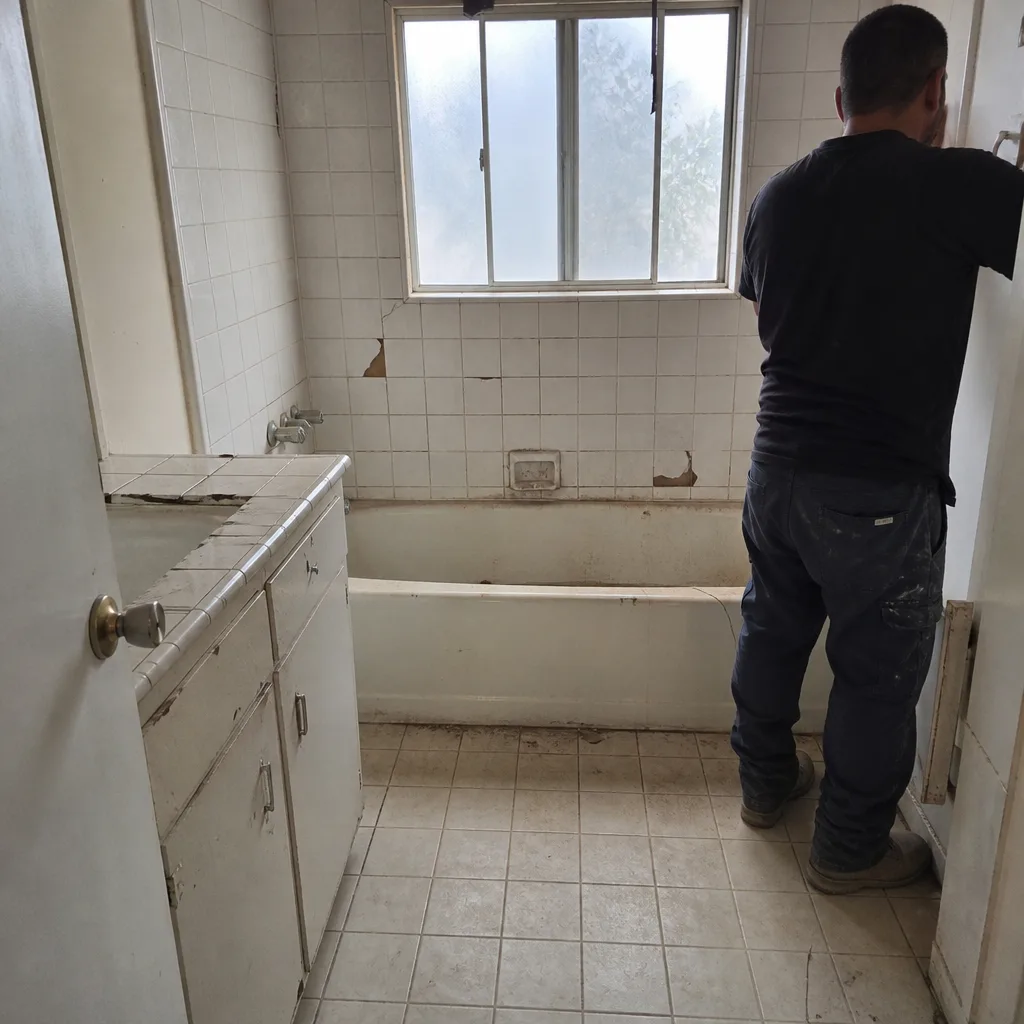 Before
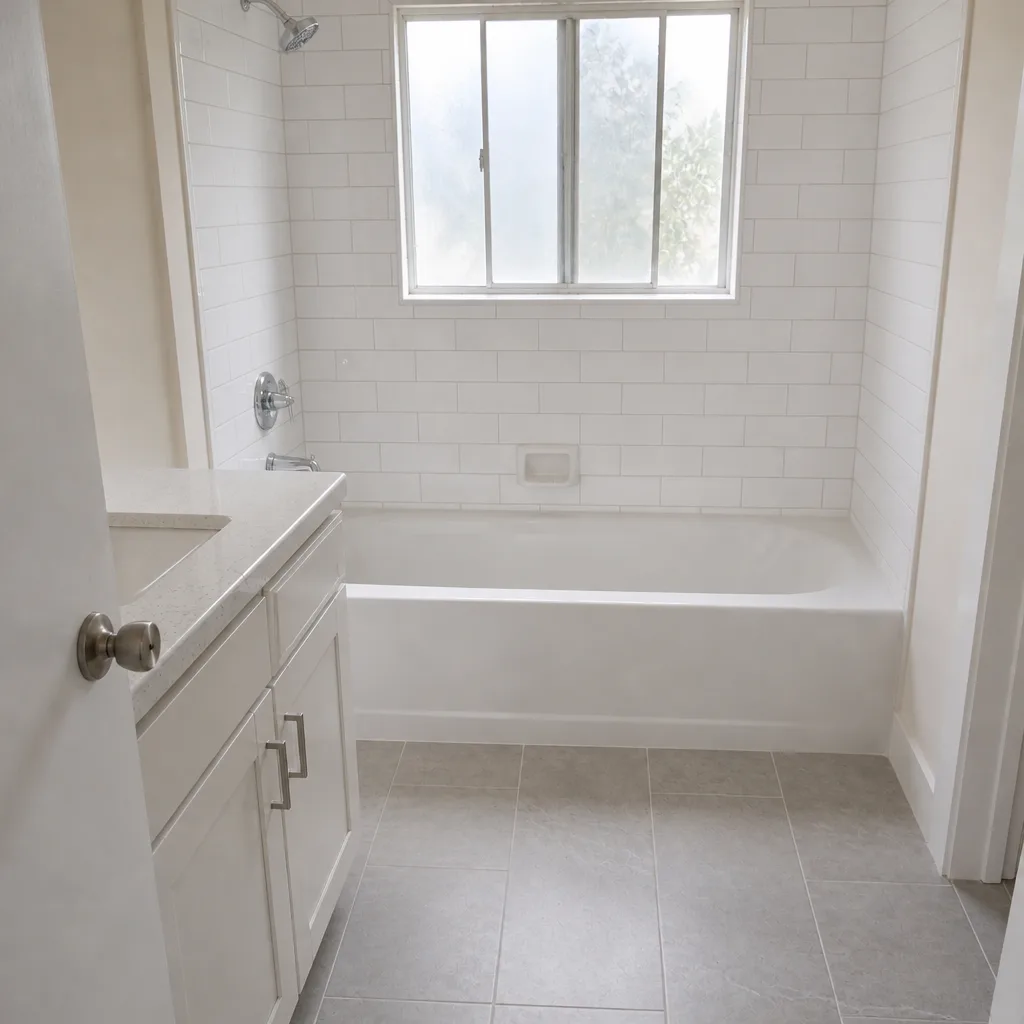 After
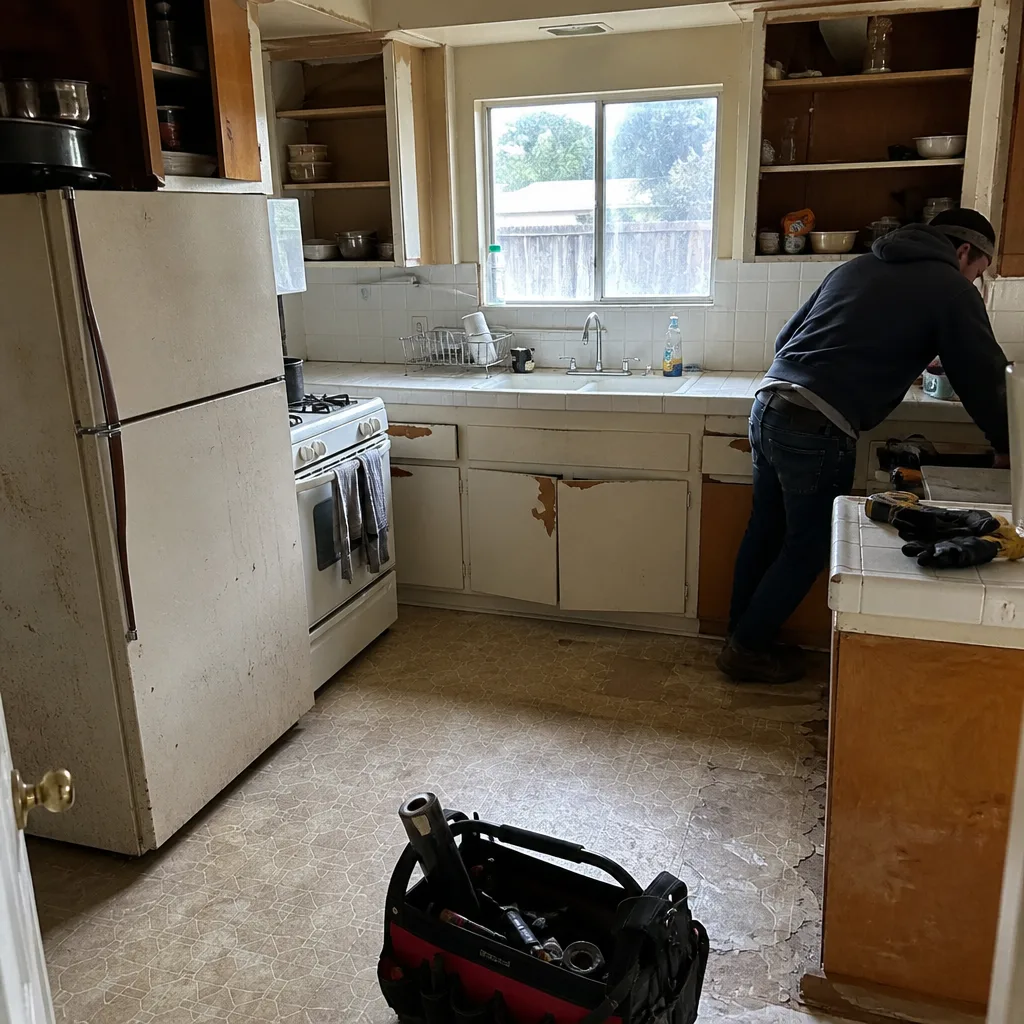 Before
 After
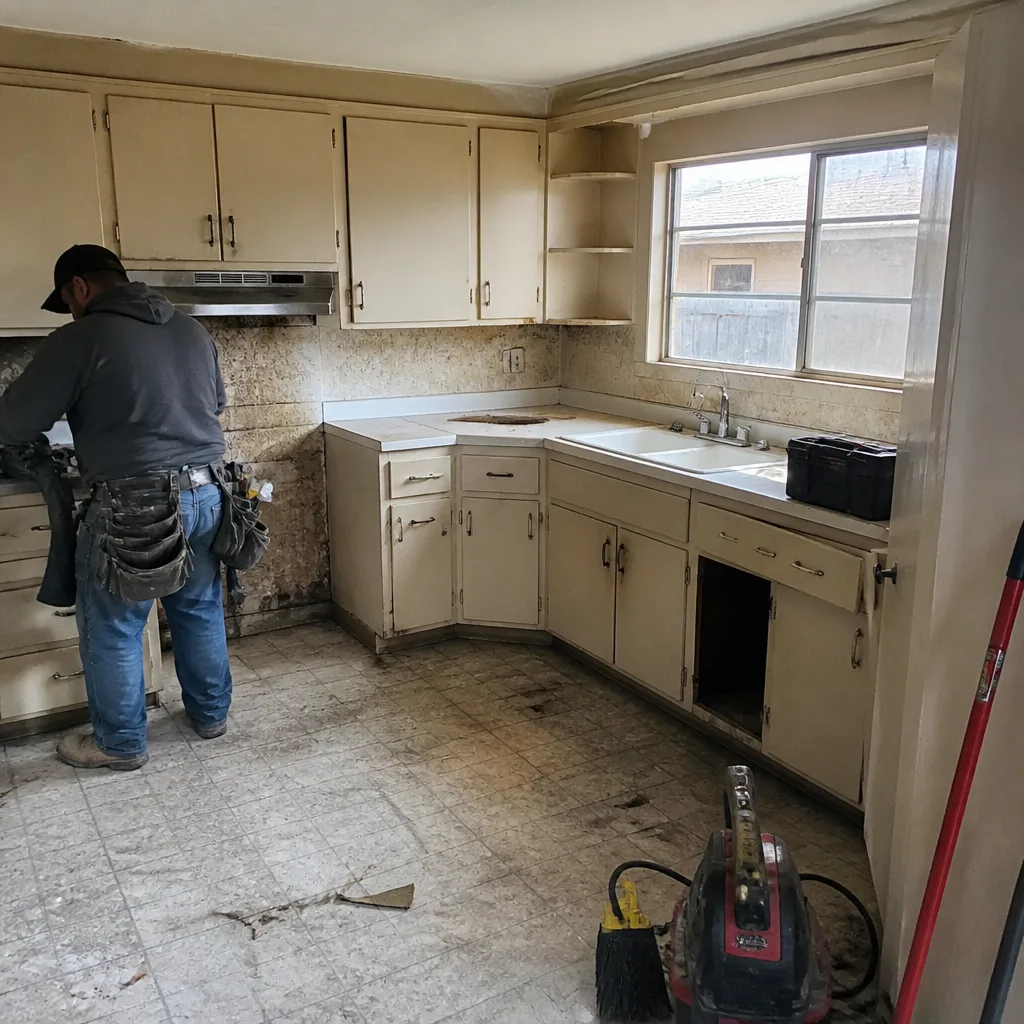 Before
 After
When to Call a Professional
Some maintenance you can handle with a tube of silicone and a vacuum. Some requires a trained hand. Call a professional when: you find water stains on the ceiling below the bathroom or a soft spot in the floor; a caulk joint has failed entirely and water is getting behind the tile; the shower valve is drifting in temperature or the handle won’t turn; the exhaust fan is venting into the attic or the duct is disconnected; the grout in the shower floor has crumbled over more than a small area; or your annual inspection turns up anything you’re not sure how to read. For a Hayward bathroom that’s beyond maintenance and ready for a real upgrade, Rowan Construction Group Hayward offers free estimates – call (866) 863-1729 to schedule yours. We’ll review your written estimate line by line at no charge under our Free Second Opinion offer, and the price we quote is written before any work starts.
Frequently Asked Questions

Replace all silicone caulk joints in a bathroom every 3 to 5 years. Silicone is a consumable material, and its adhesion to tile and acrylic degrades with every hot-cold cycle. A 5-year full replacement schedule is the long-term standard for a shower pan and tub surround. Call (866) 863-1729 for a free estimate if your caulk is due for replacement.
Yes – penetrating grout sealer should be reapplied annually on shower floors and walls, and on bathroom floors that see water. A penetrating sealer soaks into the grout pores and blocks water; it’s the single best defense for a tile shower. If your grout hasn’t been sealed in over a year, that’s the first task on the list.
Measure your bathroom’s square footage and compare it to the fan’s CFM rating using the formula of one CFM per square foot plus 50. A 40-square-foot bathroom needs a 90 CFM fan. If your mirror fogs for more than a couple of minutes after a shower, or the fan can’t hold a tissue to its grille, it’s likely undersized or clogged.
Mold returns when an undersized or dirty exhaust fan lets humidity linger, or when a caulk joint has failed and water is getting behind the tile. Both are maintenance issues, not remodel defects. A tissue test on the fan and a visual inspection of every caulk joint will find the cause. For a professional review, call (866) 863-1729 for a free estimate.
Yes, in most cases. Tile and grout warranties commonly require annual sealing per the product instructions, and fixture warranties from brands like Kohler and Toto require the cartridge be flushed and maintained. A failed part with no maintenance record is often denied as neglect.
A maintenance visit typically takes 1 to 2 hours and covers the caulk inspection, grout reseal, fan test, cartridge check, and door track cleaning. Pricing depends on scope. Call (866) 863-1729 for a free estimate – estimates are free, and the written price comes before any work starts.
Written by the team at Rowan Construction Group Hayward.
The Bottom Line
Your bathroom remodel only lasts as long as the maintenance calendar that follows it. The 30-day check catches settling faults while they’re small. The 6-month flushing and cleaning keep the cartridge and the door track working. The annual grout reseal is the single highest-value hour of the year. The 5-year caulk replacement is planned, not a crisis. And the exhaust fan – the CFM rating, the duct connection, the grille – determines how long everything else lasts. A written schedule is the difference between a shower that serves you for 25 years and one that fails at 12. If you’re ready for a bathroom project or a maintenance visit, call (866) 863-1729 for a free estimate.