Last updated November 18, 2026





Free written scope consultation - allowances, timeline, and change-order rules on paper before a single trade is scheduled
Windows & Doors Warning Signs Every Homeowner Should Know
Condensation on the inside surface of a window is a humidity problem in the room. Condensation between the panes is a failed seal in the insulated glass unit. Those two sentences sound similar and describe completely different failures with completely different repair bills, and confusing them is how homeowners get talked into full replacements they didn’t need. We’ve seen it in Hayward more times than we can count: an eight-year-old vinyl window fogged at the edges, sold as a total loss, when the glass unit alone could have been swapped. This guide walks through the misdiagnoses we correct most often, the structural warnings hiding in door frames, and the contractor red flags that predict a bad installation before a single fastener goes in.
Quick Answer
The most common window and door warning signs are condensation between glass panes (a failed seal), drafts felt at the frame edges rather than the sash (a rough-opening gap, not weatherstripping), doors that stick seasonally versus doors that bind year-round (humidity versus framing movement), and water staining at the interior trim corners (a flashing failure). Each sign points to a different fix, and a door that has begun to rack into a parallelogram shape is the one you shouldn’t wait on. A written inspection and photo record beats a verbal guess every time.
Styles & brands we work with
- Kitchen remodeling
- Bathroom remodeling
- Home additions & ADU
- Roofing
- Windows & doors
- Driveway & pavers
- Fence
Table of Contents
- Condensation: Two Problems, One Word
- Drafts: Where the Air Is Actually Coming From
- Sticking Doors: Humidity, or Something Structural?
- Water Intrusion: Flashing Failure vs. Sealant Failure
- Doors That Rack: The Warning You Shouldn’t Ignore
- Hardware Failure vs. Frame Warping
- Contractor Warning Signs in Window & Door Work
- Older Hayward Housing: The Aluminum Frame Problem
- Common Mistakes to Avoid
- When to Call a Professional
- Frequently Asked Questions
Condensation: Two Problems, One Word
Where the moisture sits tells you almost everything about what’s wrong. If the fog is on the room-side surface of the glass, your window is doing its job: it’s the coldest surface in the room, so water vapor in warm indoor air condenses there. That’s a relative humidity question, not a window failure. Run a hygrometer in the room during a Hayward winter and you’ll often find indoor humidity sitting in the sixties when it should be in the thirties to forties.
If the fog lives between the two panes and never clears no matter the weather, the seal on the insulated glass unit (IGU) has failed. Argon or krypton gas has escaped, the desiccant at the perimeter is saturated, and the unit’s insulating value drops. The frame may be perfectly fine. On most modern windows, the IGU can be replaced as a single component without pulling the whole window.
What to check, in order:
- Surface or interior. Wipe the glass. If the moisture disappears, it was on the surface.
- Clears with weather. Surface condensation comes and goes with temperature and cooking, showers, and laundry.
- Permanent fog or a hazy film. That points to IGU seal failure, and it’s worth a photo of the unit’s etched label for a warranty check.
The March 2026 helpful-content standards reward pages that answer the exact question a user typed. When someone searches “window foggy inside,” they want to know which problem they have. Too many replacement proposals skip that step. We name the condition, explain what it means, and only then talk options. Under Clause 1 of the Haven Standard, the price is written before anyone starts, and that starts with a diagnosis you can read.
Drafts: Where the Air Is Actually Coming From
A draft at a window has three plausible sources, and they’re not interchangeable. Weatherstripping seals the gap between the movable sash and the frame. Frame-to-rough-opening gaps sit behind the interior trim and behind the exterior siding. Failed glazing seals on older windows let air pass around the glass itself. A homeowner feeling cold air near a window almost always assumes weatherstripping, when the more common culprit in a Hayward home is that gap between the window frame and the wall opening, insulated poorly during an earlier install.
A simple test that costs nothing: on a windy afternoon, hold the back of your hand near the sash edge, then near the interior trim. If the cold air hits at the sash, weatherstripping or the latch is the likely source. If it hits at the trim line, the leak is behind the frame and the fix is a different scope of work.
- Felt the draft at the sash edge: check the latch, the weatherstripping, and the strike plate alignment.
- Felt the draft at the trim or the wall line: this is a rough-opening or flashing issue, not a sash issue.
- Draft felt everywhere along the assembly: the whole unit may be under-insulated at the perimeter, and re-installation may be more sensible than a repair.
Drafts get misdiagnosed because the coldest-feeling spot isn’t always the leaky spot. Cold air falls; it pools near the floor and slides along the wall. A direct measurement with a smoke pencil or a thermal camera settles the question in a couple of minutes. We document that test with photos, because a written scope that names the leak source is what keeps projects within a few percent of the agreed price.
Sticking Doors: Humidity, or Something Structural?
A door that sticks in July and opens freely in January is a humidity story. Wood moves as moisture swings. Interior doors can swell across their width enough to bind at the strike side, and adjustment is often all it takes. Weather patterns in Hayward are milder than in the Sacramento Valley, but a home with a bathroom without a vent fan can still run high indoor humidity in winter and dry out enough in summer to change how doors fit.
A door that binds all year is a different message. If it catches the same way in spring and fall, the door isn’t responding to weather – something in the wall, the floor, or the frame has moved. Door frames sit inside wall openings with maybe a half-inch of shim clearance, and the wall framing is anchored to the floor and the ceiling. Movement in the foundation, in the floor joists, or in the framing shows up here first because the door leaf and the frame have almost no tolerance to spare.
A quick test most homeowners can do in two minutes:
- Open the door to 90 degrees and look at the gap across the top. An even gap is a good sign.
- Look at the two upper corners. A gap that widens on one side and narrows on the other means the door is no longer square in the opening.
- Check the binding point. If the top corner on the latch side catches year-round, that’s a racking sign worth evaluating.
We don’t adjust a hanging door without understanding why it started hanging. The cost of a door adjustment is small; the cost of ignoring a structural cause and having a foundation issue escalate is not. That’s the basis of the diagnostic-first approach we use on every Rowan Construction Group Hayward home visit.
Water Intrusion: Flashing Failure vs. Sealant Failure
Water stains inside the frame corners, bubbling paint on the sill, dark streaks on the interior trim – these are signs of water intrusion, but two very different problems produce them. Sealant failure is a bead of caulk that has shrunk, cracked, or pulled away from the siding or trim. It’s an exterior fix, usually confined to the joint. Flashing failure is a missing or improperly lapped integration between the window’s flanged frame and the weather-resistant barrier of the wall. That’s a behind-the-wall problem, and it requires removing trim and opening the wall to fix correctly.
The clue is location and pattern. Sealant failure shows up as a thin, dark line at the joint itself, often along the top of the head trim or the bottom of the sill. Flashing failure shows up as moisture on the interior. Water gets behind the siding, runs down the weather-resistive barrier, and finds its way around the frame because the flashing wasn’t properly integrated. By the time you see interior damage, water has been working its way in for a while.
How to tell them apart, in order:
- Look at the exterior trim joint. A visible crack in the sealant at a joint that shows no interior signs is a sealant job.
- Look at the interior corners of the trim and the sill. Staining or bubbling here suggests water is getting behind the wall, which points to flashing.
- Look at exterior sheathing after trim removal. A professional inspection reveals staining, delamination, or soft spots behind the frame; that’s the flashing problem.
These are different price brackets. A sealant refresh is a small line-item repair. A flashing repair that opens the wall may involve trim removal, sheathing replacement, and re-integration of the water barrier. Neither should be guessed at from the driveway. We use GAF and CertainTeed flashing materials where a full re-flash is needed, and the photo record of what we found is part of what you receive.
Doors framed into an exterior wall see the same water issues as windows, plus a threshold concern. A soft or weeping sill under an exterior door is often a threshold detail problem rather than a sealing one. If the water intrusion is affecting an attached structure, the fix may cross into your Home Additions & ADU in Hayward scope if that addition shares the affected wall.
Doors That Rack: The Warning You Shouldn’t Ignore
A door that has begun to rack – meaning the rectangular frame is deforming into a parallelogram – is the most important warning sign in this guide. It’s also the easiest to write off as “the door got stiff.” Racking almost always starts underground or at the floor system. The wall moves, the door frame follows, and the door leaf binds at a corner because the opening is no longer square.
What to look for:
- Head jamb gap asymmetry. The gap across the top is noticeably wider on one side than the other, and the difference is increasing over months.
- A diagonal crack in the drywall above the door. Often hairline at first, then longer and more visible.
- Doors that close but pop the latch. The strike plate has moved relative to the latch.
- Squeaking or scraping at a specific corner that wasn’t there six months ago.
- New cracks at other penetrations nearby – at another door, a window, or a corner bead.
This is where we tell homeowners plainly: a door adjustment is a short visit. A door adjustment that ignores a foundation or framing issue is throwing money at a symptom. The evaluation that needs to happen is of the foundation, the floor structure, and the framing, and that means having someone on site who can read all three. When we see racking, we document it, name it, and put the recommendation in writing before any repair work gets scoped. If the movement is significant, a structural evaluation comes first, before any door hardware gets re-aligned.
If the door is on an exterior wall and the movement is also affecting the fence line or a slab, that pattern is worth noting in a broader Fence Installation in Hayward or site inspection conversation, because movement signs often show up in multiple places at once.
Hardware Failure vs. Frame Warping
A door that won’t latch has two common causes, and they call for opposite fixes. Hardware failure means the lock mechanism, the hinges, or the strike plate has worn or shifted; the frame is sound, and the fix lives at the hardware. Frame warping means the frame itself has moved out of plane, and no amount of hardware adjustment will solve it because the door no longer sits in a flat opening.
A good check for homeowners is to look at the door’s reveal – the gap between the door and the jamb. An even reveal on all four sides is the healthy baseline. A reveal that’s tight at one corner and generous at the opposite corner is a warp. A reveal that’s tight along one long edge with no corner pattern is more likely a hinge problem or a strike adjustment.
Hinge wear is common on doors that see daily use. Housing stock from the 1960s and 1970s throughout Hayward often has original three-screw hinges; pulling the top screw of the top hinge and seeing elongated holes in the jamb is a small sign with a small fix. If the fix is a hinge plate and a longer screw, the door gets fixed for less than the cost of a diagnostic visit. If the fix is a frame adjustment, that’s a bigger scope. Naming the distinction before work starts is the point.
Contractor Warning Signs in Window & Door Work
Installation determines how a window or door performs for the next twenty years, and the signs of a poor installation are visible during the job if you know what to look at. The three we watch for most:
- No permit pulled for work that requires one. In Hayward, replacing windows or doors where the opening dimensions change, where the frame material changes (aluminum to vinyl, for example), or where structural headers are affected, typically triggers a permit requirement. Replacement-with-same-size may not. A contractor who shrugs at the permit question is telling you something about the rest of the job too.
- No manufacturer installation instructions on site. Every reputable window brand – and this is true whether the product is from a national line or a regional fabricator – ships an installation manual with spec-grade tolerances for shimming, fastening pattern, and flashing integration. If the crew hasn’t got the manual, they’re installing from memory. Ask what the manual calls for at the frame anchor spacing.
- No written warranty distinguishing product from labor. The window manufacturer’s warranty covers the product; the installer’s warranty covers the install. Both need to be in writing and both need to be delivered to you before the job closes. A verbal “we stand behind it” is not a written warranty.
A fourth sign, quieter but telling: unclear about the flashing detail. Any contractor installing windows or doors in an exterior wall should be able to describe exactly how the weather-resistant barrier laps the window flange, from the bottom up, in about thirty seconds of plain language. If the answer is vague, the flashing is likely to be vague too.
Under our 365-Day Done Right Promise, if it isn’t done right, we make it right. That’s a written commitment backed by a terms page, not a handshake, and it’s the reason we push for the permit and the manual reference on every job.
Older Hayward Housing: The Aluminum Frame Problem
Hayward’s mid-century and later postwar housing stock has a large share of aluminum single-pane windows, and aluminum has a different failure signature than vinyl or wood. Aluminum doesn’t rot. It oxidizes, and on older anodized or painted frames that oxidation shows up as a chalky white powder that wipes off on a rag. Once that powder is established at the frame-to-glass joint and the perimeter seal, the window has usually reached end of service life. It’s a thermal failure, a seal failure, and an aesthetics problem at the same time.
Compare that with a ten-year-old vinyl window with one fogged pane from a failed IGU. The vinyl is fine. The frame is fine. The glass unit needs replacement. Those are opposite calculations, and the decision should be based on the frame’s condition, not just the glass.
The economics of replacing aluminum single-pane stock in Hayward also touch the thermal bill. Aluminum conducts heat roughly a thousand times more efficiently than vinyl or wood, so a hot Hayward afternoon drives heat straight through the frame into the room. Modern dual-pane with a thermally broken frame changes that equation materially. If part of the goal is comfort and part is energy cost, the frame material is where the leverage sits.
Homes that sit under mature trees on Hayward’s west side see more organic debris in the window reveal and door track. Regular clearing of that debris is the cheapest maintenance step in this guide and the one most often skipped. It isn’t glamorous. It extends the life of every sliding window and sliding door in the house.
Common Mistakes to Avoid
- Replacing a window because the glass fogs. Failed IGU seals are often a glass-only replacement. The frame is usually fine. Confirm the frame’s condition separately from the glass before accepting a full-replacement bid.
- Caulking over a flashing problem. A fresh bead of exterior sealant over a failed flashing detail traps water behind the wall, making the eventual fix more extensive. Solve the flashing first.
- Adjusting a racked door and calling it done. A door that has moved out of square is telling you something about the wall and floor. Ignore it and a foundation or framing issue gets a longer runway to grow.
- Accepting a verbal warranty. Ask for the manufacturer’s product warranty and the installer’s labor warranty in writing. If either is missing, that’s a signal about the rest of the job.
- Skipping the permit to save time. Unpermitted window and door work shows up later at resale, and the inspection cost falls on the seller, not the installer.
- Assuming a draft means old windows overall. A draft at the trim line is often a rough-opening insulation issue, which is a different job. Diagnose before you demo.
- Ignoring the interior photo record. Ask for photos of the flashing, the shim pattern, and the anchor spacing. If the crew didn’t take them, that’s another signal.
For a look at how these same diagnostic principles apply elsewhere on the house, the Driveway & Pavers in Hayward page shows what a written price and documented scope look like beyond the window and door trade.
When to Call a Professional
Call for a diagnostic visit when any of the following is true: condensation between the panes that never clears; a door that binds year-round rather than seasonally; a door frame showing a parallelogram reveal with an increasing gap at the top; water staining at interior trim or sill corners; a soft spot or dark spot at the exterior sheathing after a heavy rain; or a draft that’s cold at the trim line, not just at the sash. Some of these need a glass unit. Some need a flashing re-work. Some need a structural evaluation before any window or door work gets scoped. Getting the diagnosis right is the difference between a small line-item repair and a full replacement you didn’t need.
Rowan Construction Group Hayward offers free estimates in Hayward – call (866) 863-1729. Bring any written estimate you’ve already received, and we’ll review it line by line at no charge under our Free Second Opinion offer. Every visit includes a documented photo record as a standard deliverable, so you know what we found, not just what we recommended.
Frequently Asked Questions
Condensation between the panes means the insulated glass unit’s seal has failed and moisture has entered the space between the glass. In most cases the frame remains sound and only the IGU needs replacement, which is a smaller and less expensive scope than a full window replacement. The desiccant at the unit’s edge is saturated, so the fog will not clear on its own. A photo of the etched label on the glass helps confirm the unit is still under manufacturer warranty.
A door that sticks in one season and works fine in another is a humidity issue, and adjustment usually solves it. A door that binds the same way year-round is signaling movement in the wall, floor, or foundation, and that needs a structural evaluation. The tell is the reveal: an even gap on all four sides is healthy, and an asymmetric gap that changes over months is not. Call (866) 863-1729 for a diagnostic visit if you’re seeing the asymmetric pattern.
Permit requirements depend on what changes. A same-size replacement in the same opening often does not require a permit, while a change in opening size, a change in frame material, or work that affects a structural header typically does. The safe answer is to ask the contractor to confirm in writing what the local building department requires for your specific scope. A contractor who can’t answer the permit question with specificity is a warning sign worth heeding.
A sealant failure is a caulk joint that has cracked or pulled away on the exterior – a small repair confined to the joint itself. A flashing failure is a missing or improperly lapped integration between the window’s flanged frame and the wall’s weather-resistant barrier, and it requires opening the wall to fix correctly. The clue is where the damage shows. Exterior joint staining points to sealant; interior trim and sill staining usually points to flashing.
Pre-1980 aluminum single-pane windows that show white powdery oxidation at the frame and perimeter seals have typically reached end of service life, and replacement is usually the better calculation than repair. The thermal conductivity of aluminum means the frame itself is the weak point, not just the glass. A newer vinyl window with a failed IGU is a different case entirely, and often needs only the glass unit replaced.
You should receive two written warranties: the manufacturer’s product warranty covering the window or door itself, and the installer’s labor warranty covering the installation work. Ask for both in writing before the job closes, and ask specifically what each covers and how long each lasts. A verbal “we stand behind it” isn’t a warranty. Under our 365-Day Done Right Promise, our own workmanship warranty is written and stated up front.
The Bottom Line
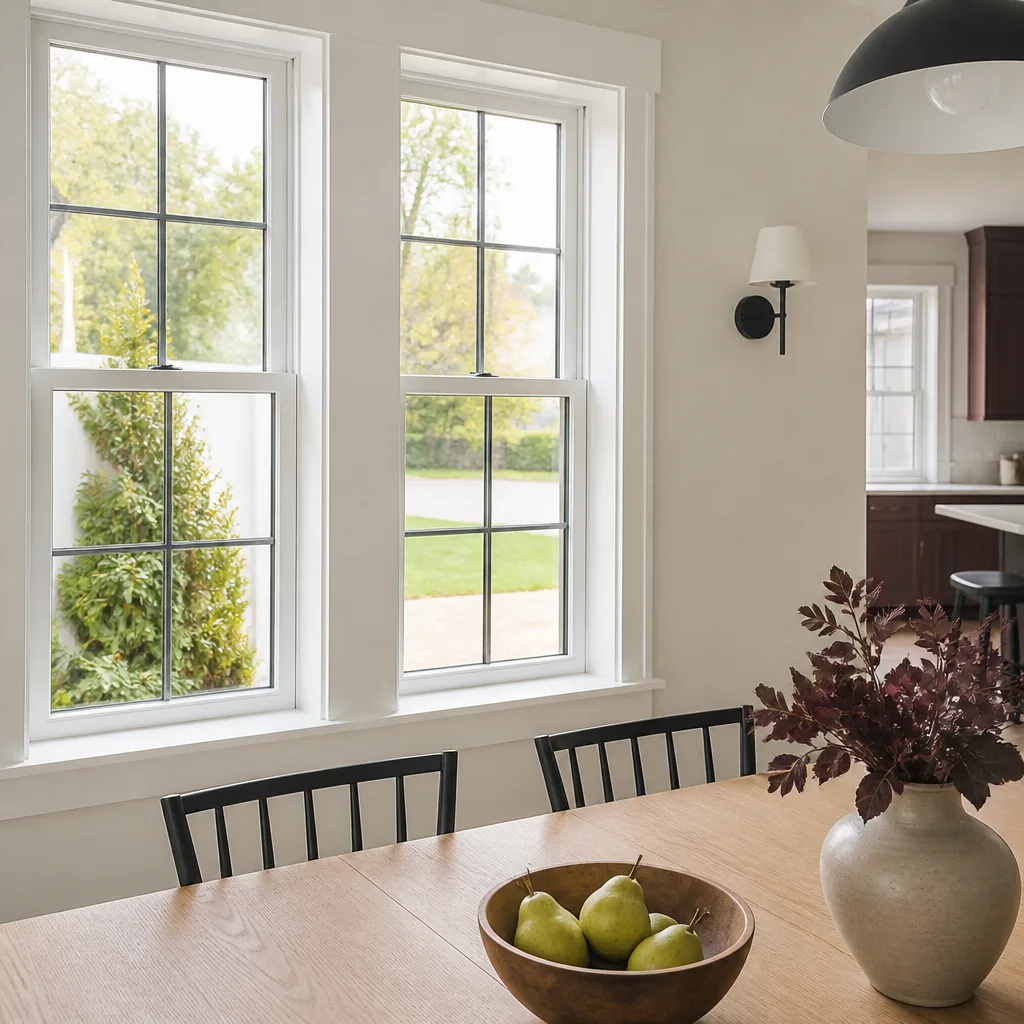
Most window and door problems people pay to fix are misdiagnosed at the start, and the cost of the misdiagnosis is often larger than the repair itself. Surface condensation is a humidity issue. Fog between panes is a seal failure. A draft at the sash is weatherstripping; a draft at the trim is a rough-opening gap. Seasonal sticking is humidity; year-round binding is movement. A door that has begun to rack is the one warning you shouldn’t wait on. And when it’s time to hire, ask about the permit, the manufacturer’s installation manual, and the written warranty – all three, every time, because the installation determines how the window performs for the next twenty years.
If you’d like a written scope and a written price before anyone picks up a tool, Rowan Construction Group Hayward offers free estimates across all seven trades – windows and doors, roofing, kitchen and bath, fence, driveway and pavers, and additions including ADUs. Call (866) 863-1729 to schedule your free estimate. A live person answers, and the photo record of what we find goes home with you whether or not you hire us.
Written by the team at Rowan Construction Group Hayward.
See the difference
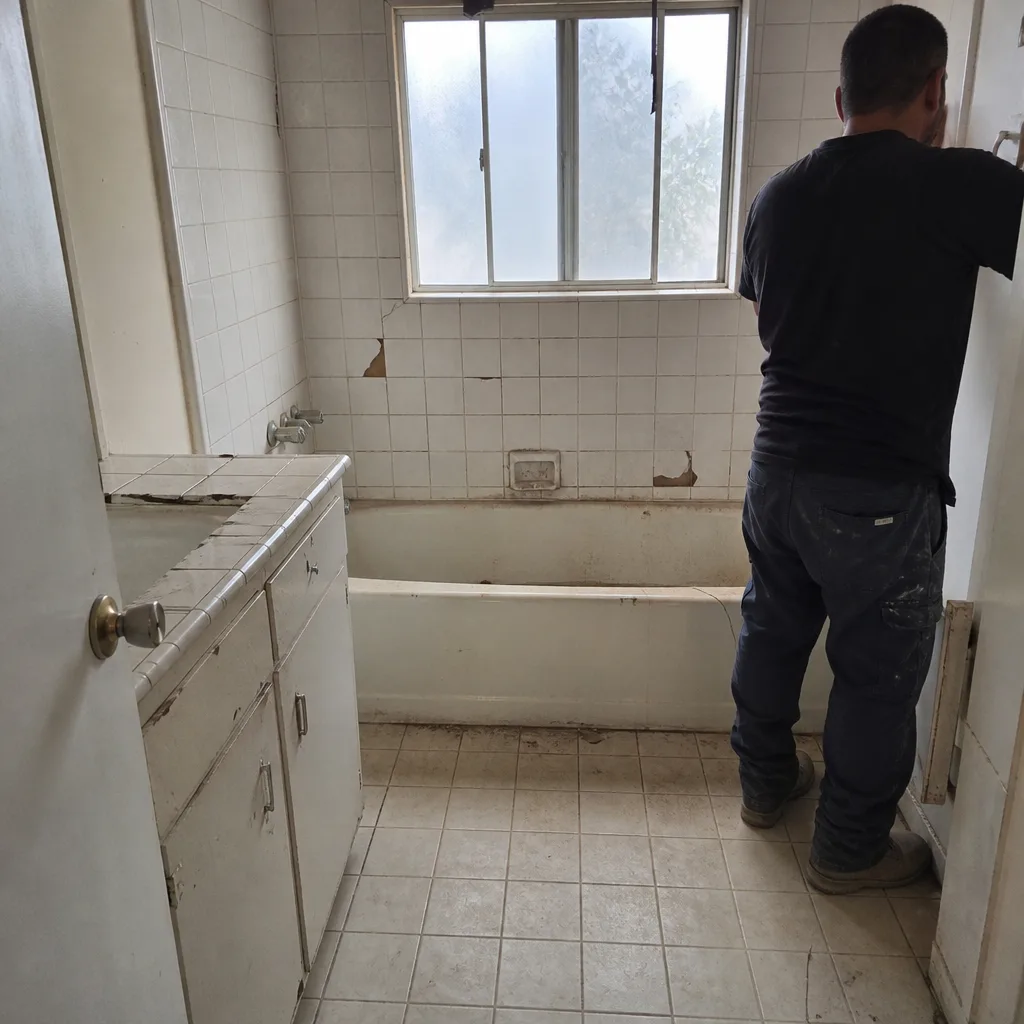 Before
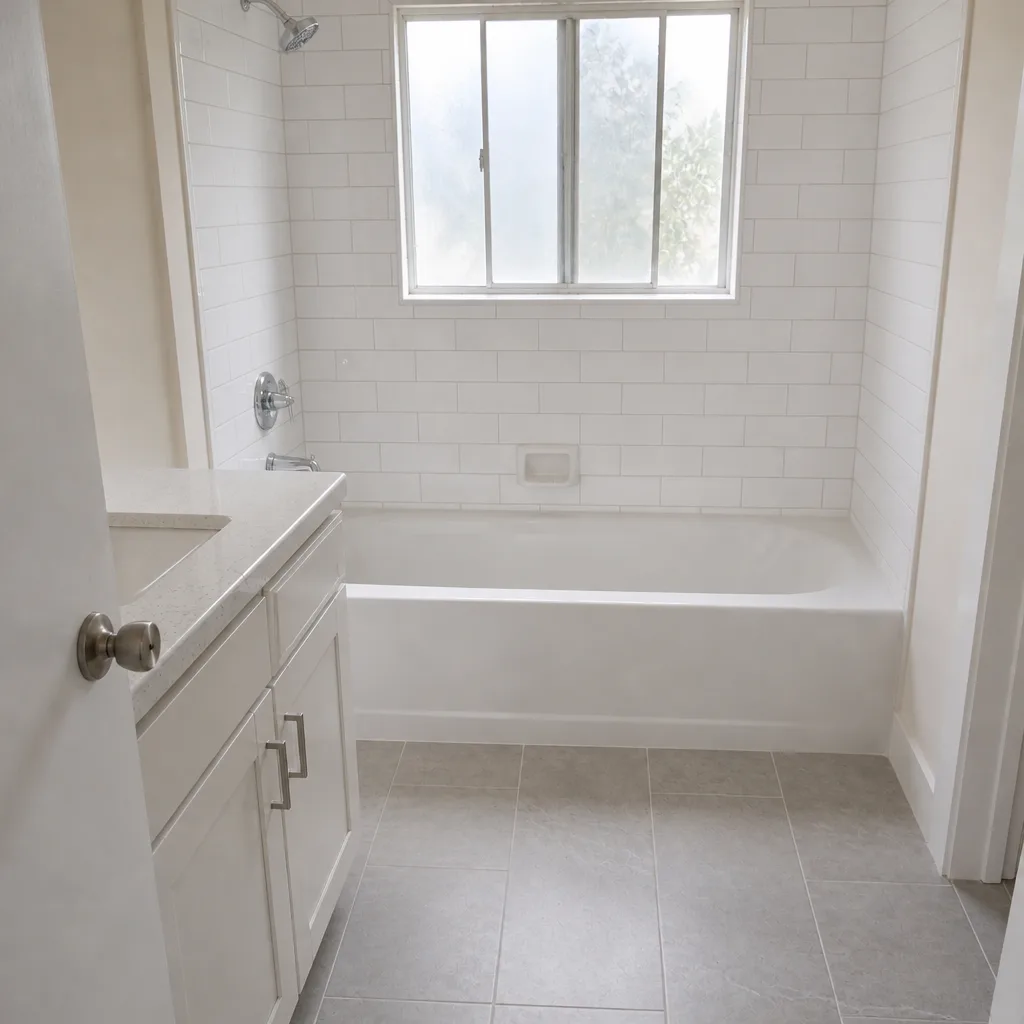 After
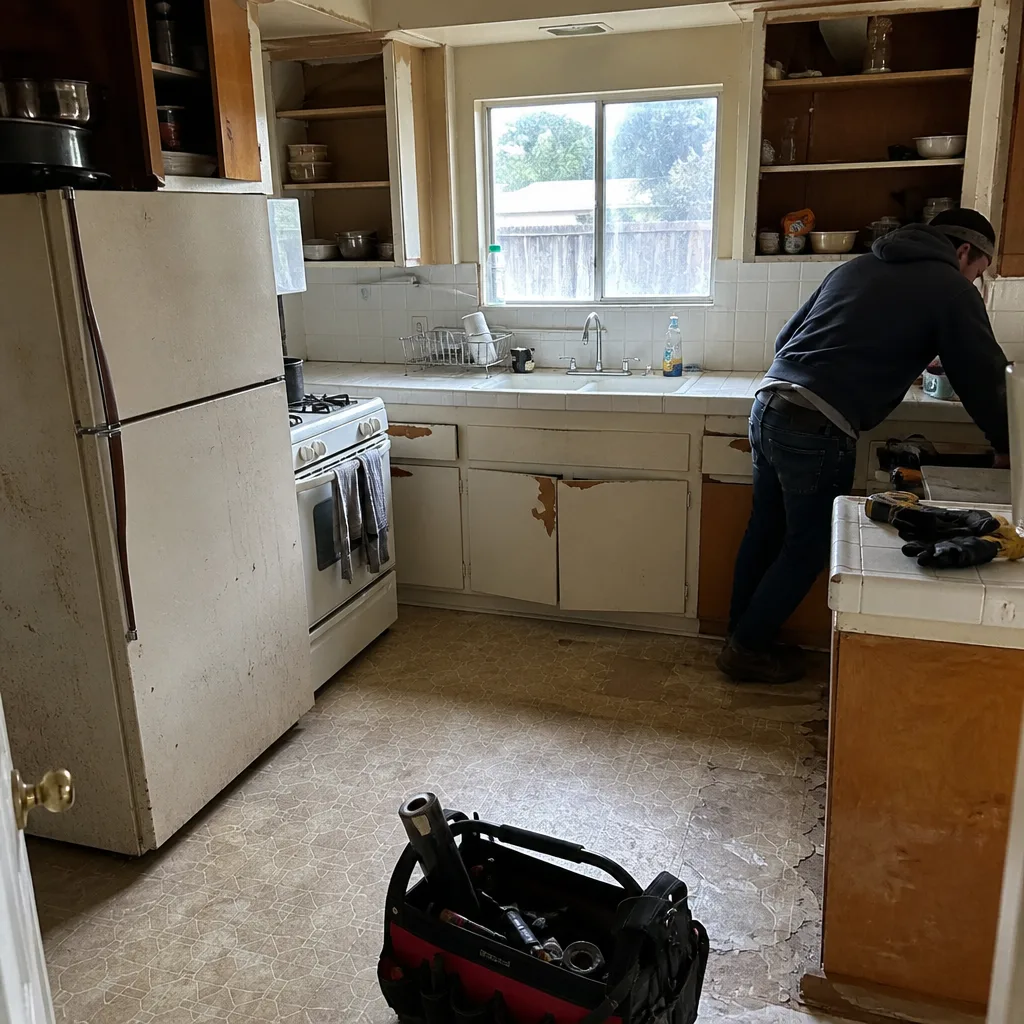 Before
 After
 Before
 After