Last updated November 18, 2026
Free written scope consultation - allowances, timeline, and change-order rules on paper before a single trade is scheduled
The Complete Fence Installation Guide for Hayward Homeowners
Hayward allows a 6-foot fence in a rear yard by right, but that height is measured from the highest adjacent grade, not from your own yard’s grade. If your neighbor’s lot sits 18 inches higher than yours and you set a 6-foot fence on the property line, your neighbor is looking at a 7.5-foot structure and the city treats that as a variance situation. Before you pick a material or a contractor, you need a map of the three regulatory systems that govern Hayward fences: zoning height limits, county setback expectations, and California’s shared-fence statute. This guide walks all three, then gets to brands, clay soil, and what a real written bid should say.
Quick Answer
A fence installation in Hayward typically runs $22 – $65 per linear foot installed depending on material, with a standard 150-foot perimeter landing between $3,300 and $9,750 before permits. Rear and side yard fences can be 6 feet tall by right; front yard fences max out at 3.5 feet. California Civil Code 841 requires 30 days’ written notice to an adjacent owner before you build on a shared boundary, and posts in Hayward’s expansive clay need to be set at least one-third of their above-grade height plus 6 inches deep in a concrete collar with drainage aggregate underneath.
Styles & brands we work with
- Kitchen remodeling
- Bathroom remodeling
- Home additions & ADU
- Roofing
- Windows & doors
- Driveway & pavers
- Fence
Table of Contents
- The Three Regulatory Systems That Govern a Hayward Fence
- Hayward Fence Height Rules by Zone
- California’s Good Neighbor Fence Law, Explained Plainly
- Material Costs, Named Brands, and What You Actually Get
- Why Posts Fail in Hayward’s Clay Soil (and How to Stop It)
- What a Complete Written Fence Bid Must Include
- Do You Need a Permit in Hayward?
- Common Mistakes to Avoid
- When to Call a Professional
- Frequently Asked Questions
The Three Regulatory Systems That Govern a Hayward Fence
Most homeowners walk into a fence project assuming one set of rules applies. In Hayward, three do, and they don’t all point the same direction. The first is the Hayward Municipal Code, which sets maximum heights by yard zone and defines how those heights are measured. The second is Alameda County’s approach to property-line structures, which shapes setback expectations and how disputes get resolved when a fence sits close to a boundary. The third is California Civil Code 841, the Good Neighbor Fence Law, which governs who pays for a boundary fence and what notice is required before you build one.
The order matters. Civil Code 841 governs your relationship with your neighbor. Hayward zoning governs your relationship with the city. Setbacks govern the physical gap between the two. Getting any one of them wrong can lead to a correction notice, a civil demand, or in the worst case a mandatory tear-down of a fence you just paid to install. Our crews have walked away from jobs where a prior installer ignored all three and the homeowner was on the hook for a re-do within 18 months.
If you’re planning the fence as part of a larger yard or lot project, it helps to think of it alongside the hardscape. Our guide on Driveway & Pavers in Hayward covers how graded surfaces interact with fence lines and drainage, which is exactly the question that comes up when a driveway apron runs into a corner post.
How to sequence the three systems
- Start with Civil Code 841. If the fence sits on a shared boundary, notify your neighbor in writing at least 30 days before installation. Keep a copy.
- Then confirm zone height. Call the City of Hayward Planning Division for a pre-application review. They’ll tell you the applicable height limit for your yard zone and how grade is measured for your lot.
- Then check setbacks. Confirm the required distance from the property line and from any corner sight triangles, especially on corner lots along streets like Foothill or Hesperian.
Only after those three are clear does material selection make sense.
Hayward Fence Height Rules by Zone
Hayward measures fence height from the highest adjacent grade on either side of the fence line. That single clause changes the math on sloped lots in the Hayward Hills, where a fence that reads as 6 feet from your patio may read 7 feet or more from your neighbor’s. The rules break down like this:
- Front yard: 3.5 feet maximum. This applies to any fence within the front setback area facing the street.
- Side yard: 6 feet maximum behind the front setback line.
- Rear yard: 6 feet maximum.
- Corner lots: sight-triangle restrictions can lower the maximum height near the corner itself, even in a side yard.
Any fence taller than the zone maximum requires a variance from the City of Hayward. Variances are reviewed on hardship grounds, take weeks to months, and a neighbor’s objection carries weight. The cheaper path is almost always to trim height or step the fence down a grade change rather than fight for the extra 6 inches.
How grade is measured, and where it trips people up
Grade is the ground surface adjacent to the fence, not an average of your lot. On a sloped lot, the highest adjacent grade is the highest point where the fence meets the ground, including your neighbor’s side. If your neighbor’s terrace is 18 inches above yours, plan for the fence footprint accordingly. Two tactics work: set the fence entirely on your side of the property line so the grade reference is yours, or step the fence at grade changes so each panel is measured against its own local grade. Both are decisions to make before the post holes get dug.
For pre-application review, the City of Hayward Planning Division is the correct call. They’ll tell you the zone designation for your parcel and how they interpret the highest-grade rule for your specific lot. That conversation is free and takes one call.
California’s Good Neighbor Fence Law, Explained Plainly
Civil Code 841 gives both adjacent property owners a right to a fence on a shared boundary and splits the reasonable cost of that fence between them, unless one owner chooses a more expensive material than necessary. In practice, three duties sit on the installer’s side:
- Written notice. You must provide at least 30 days’ written notice to the adjacent owner before building on a boundary. The notice should describe the fence, its height, materials, and the estimated cost to be shared.
- Reasonableness. The material and cost must be reasonable for the neighborhood. A $48-per-linear-foot cedar fence next to a run of chain-link in a working-class block may be challenged as unreasonable in cost-sharing.
- Record-keeping. If the neighbor refuses to pay, 841 allows you to build the fence and pursue contribution in small claims court. Your written notice and itemized bid become the evidence.
What happens when a neighbor says no? You can still build the fence on your side of the property line at your own cost, which avoids the shared-boundary question entirely. Many Hayward homeowners choose this route for simplicity, especially in Castro Valley-adjacent blocks where adjacent owners are renters and the landlord is unreachable.
Material Costs, Named Brands, and What You Actually Get
Material pricing swings the total more than any other decision. Here’s the range we quote in Hayward, installed, including posts, concrete, and fasteners.
- Pressure-treated pine (Mendocino Forest Products): $22 – $35 per linear foot installed. Budget-friendly, needs a stain or sealer within 12 months in Hayward’s dry-season sun.
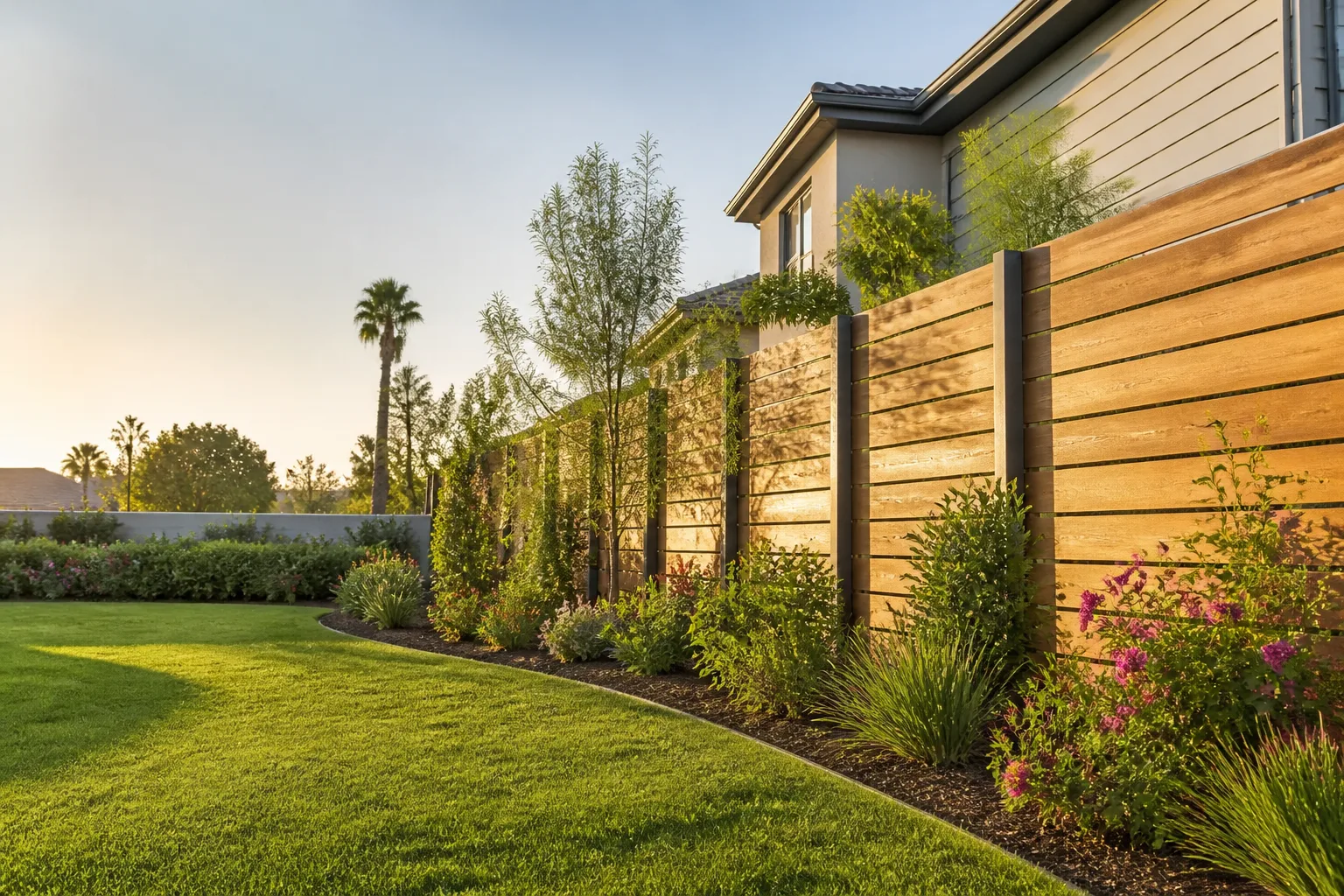
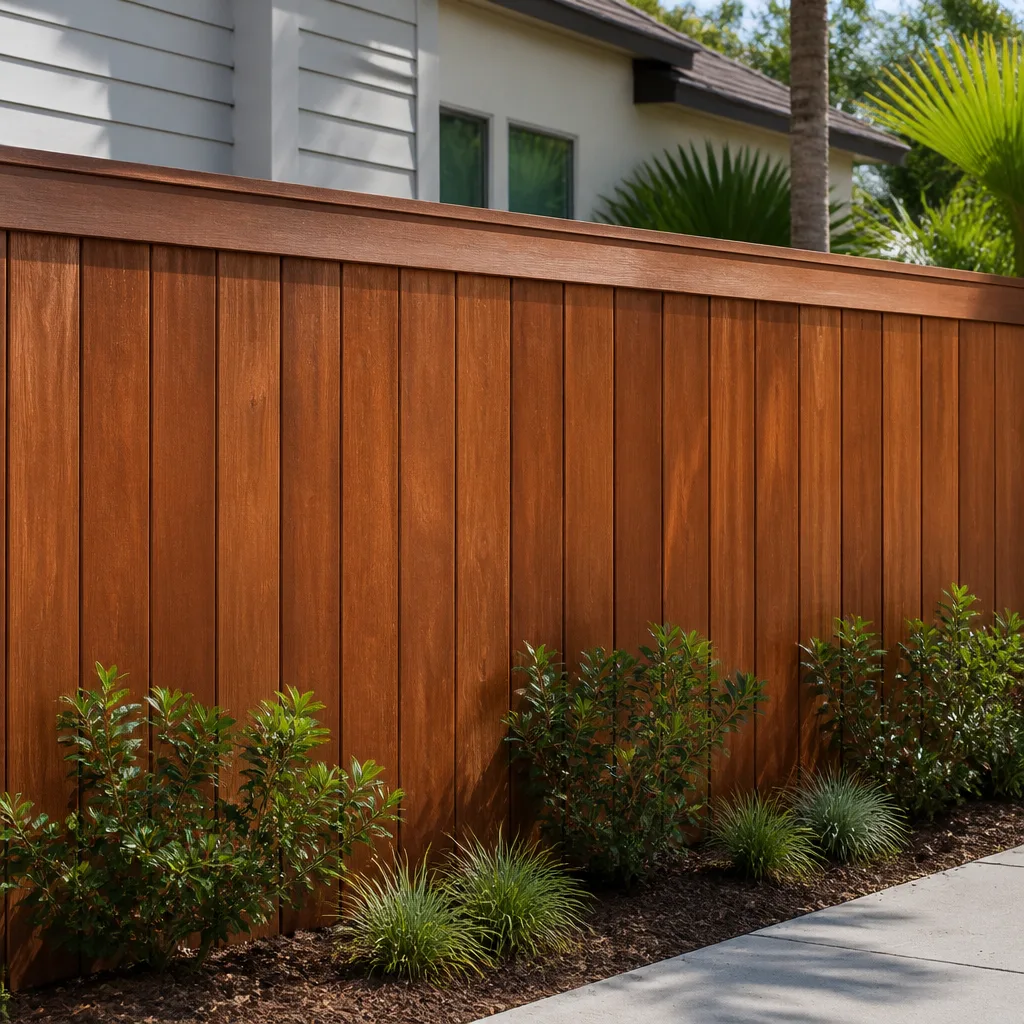
- Cedar (Humboldt Redwood, Western Red Cedar): $30 – $48 per linear foot installed. Naturally rot-resistant, holds stain longer, preferred for visible shared fences.
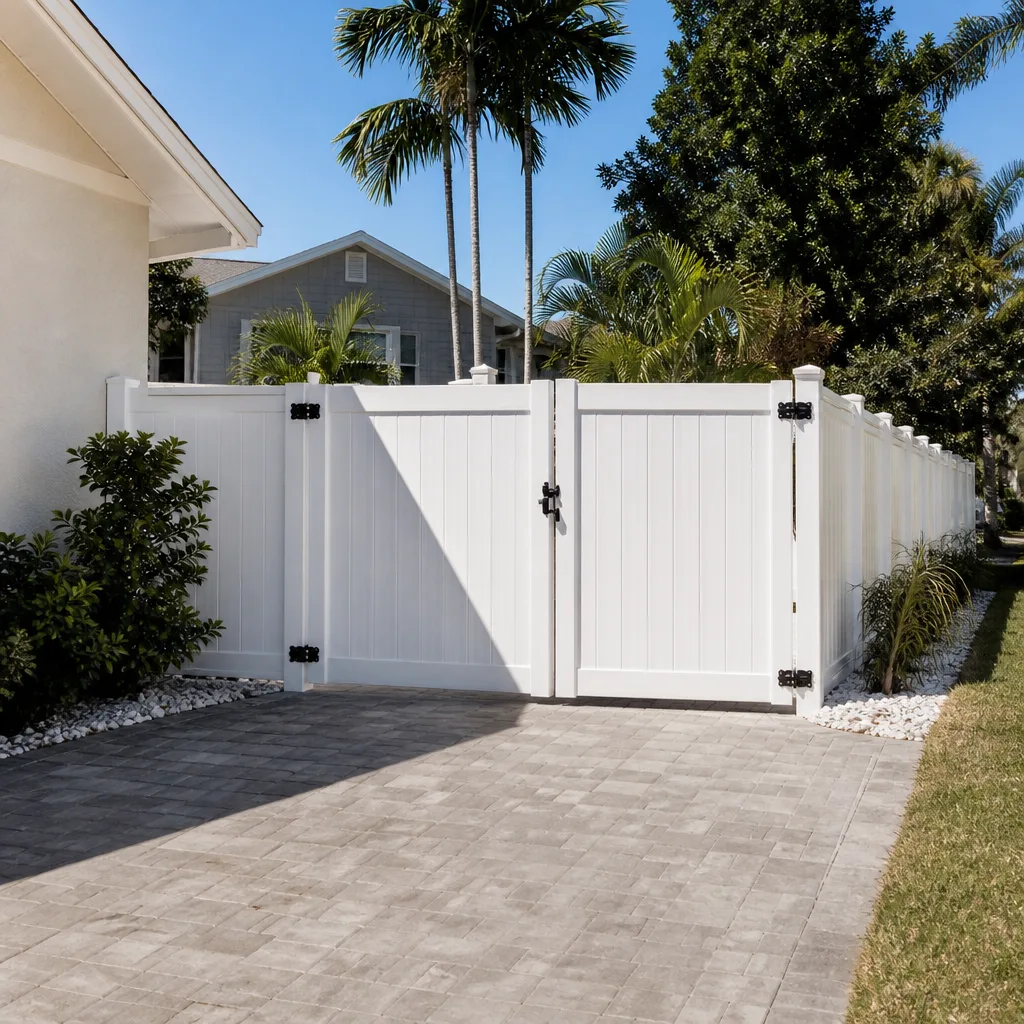
- Vinyl (Bufftech, CertainTeed): $28 – $45 per linear foot installed. No painting, no splitting, but color options are finite and impact damage is permanent.
- Aluminum (Jerith, Fortress): $38 – $65 per linear foot installed. Best for view corridors on hillside lots where privacy is secondary to keeping the bay view open.
Boral and PGT both make fence-adjacent accessory products worth asking about if the fence ties into a gate or a screen enclosure. The brand matters less than the specification – a low-end version of a good material fails faster than a high-end version of a modest one.
For a 150-foot perimeter, expect $3,300 to $9,750 installed depending on the mix. That’s the number to bring to a bid comparison, not the per-foot figure alone, because foot pricing hides what’s in the line item.
Why Posts Fail in Hayward’s Clay Soil (and How to Stop It)
Hayward sits on expansive clay that swells when wet and shrinks when dry. A post set at the wrong depth or without proper drainage fails at the collar within three to five years, and then the whole run lifts, leans, or bows. The math that keeps a post standing:
- Depth: minimum one-third of the above-grade post height plus 6 inches for wind load. A 6-foot above-grade post needs at least 2 feet 6 inches below grade in Hayward soil.
- Hole diameter: 3 times the post width at the base. A 4×4 post needs a 12-inch hole; a 6×6 needs 18 inches.
- Concrete collar: a proper mix (typically a 3,000 psi bagged mix, not dry-set “just add water and walk away”), poured so it crowns above the surrounding grade and sheds water away from the post.
- Drainage aggregate: 4 – 6 inches of 3/4-inch gravel at the bottom of the hole. This is the step most cheap installers skip, and it’s the one that keeps the clay from wicking moisture up the post.
- Post treatment rating: UC4B for any post in ground contact, meaning it’s rated for the hardness and lifespan a buried post requires. UC4A doesn’t cut it.
We’ve inspected year-old fences in Hayward where 2-foot posts in clay without drainage aggregate had already started to lift at the first joint. That’s a repair that costs more than the original fence should have.
What a Complete Written Fence Bid Must Include
A one-line quote that says “$34 per foot” is not a bid. It leaves ten decisions unspoken, and every one of those decisions can become a change order once work starts. A complete written bid in Hayward should carry these line items:
- Post species and treatment rating: for pressure-treated pine, the treatment rating should be listed (UC4B for ground contact). For cedar, note whether it’s Western Red Cedar or Humboldt Redwood.
- Concrete mix specification: psi rating, bag mix, and whether drainage aggregate is included.
- Panel attachment method: face-nailed, hidden fastener, or stringer-through. Visible vs. concealed matters on a shared fence.
- Gate hardware: hinges, latch, post size (a gate needs a 4×4 minimum, usually 6×6 for a 4-foot gate).
- Permit cost, itemized: Hayward permit fees should appear as a separate line, not folded into the per-foot price.
- Site prep and disposal: removal of an existing fence and hauling, listed separately from installation.
- Written warranty: workmanship and material coverage as its own line, not a verbal “we stand behind it.”
This is the standard Rowan Construction Group applies to every fence we quote. The written price is set before any work starts, and no change proceeds until the change order is signed – the same discipline across all seven trades we run, from fence installation through Home Additions & ADU in Hayward.
Do You Need a Permit in Hayward?
Most fences up to 6 feet in rear and side yards in Hayward don’t require a building permit, but they do require that you stay within the zoning height. Fences over the zone maximum, fences in a front yard over 3.5 feet, and fences within a required sight triangle at a corner do need review. Retaining walls combined with fences often trigger permits because the wall itself carries load. Call the City of Hayward Planning Division for a pre-application conversation before you sign a contract – it saves the correction notice later. A written bid should always itemize whether a permit is included and what it costs.
Common Mistakes to Avoid
- Skipping Civil Code 841 notice. Building on a shared boundary without 30 days’ written notice leaves you without standing in a cost-sharing dispute, and it hands your neighbor an easy objection to the fence itself.
- Measuring height from your own grade only. On sloped lots in the Hayward Hills, the highest adjacent grade – not your patio – determines the legal height. A 6-foot fence measured from the wrong grade becomes a variance situation.
- Setting posts too shallow in clay. A 2-foot post in Hayward’s expansive clay without drainage aggregate fails within five years. The fix isn’t to re-drill; it’s to set the depth correctly the first time.
- Accepting a “per-foot” quote with no line items. Any bid that doesn’t list concrete spec, post rating, and permit cost is a bid designed to grow through change orders.
- Choosing material without a brand specification. “Cedar” could mean a bargain grade with heartwood content that rots in eight years. Name the species and the supplier on the bid.
- Ignoring drainage on the neighbor’s side. A fence that sheds water onto a neighbor’s yard creates a civil issue regardless of height compliance.
- Building in a sight triangle on a corner lot. A fence near a corner intersection that blocks visibility becomes a city correction, not a neighbor dispute. Both are avoidable with a pre-application call.
When to Call a Professional
Call a contractor when the fence is on a shared boundary, when the run exceeds 100 feet, when the lot is sloped, when a retaining wall is involved, or when you don’t already know the answer to “can I build on the property line.” Those five scenarios are where DIY fences in Hayward fail code or fail civil-code. Below that, a homeowner with grading experience and a 60-foot straight run can reasonably self-perform, provided a pre-application call to the City confirms the height. Rowan Construction Group Hayward offers free estimates in Hayward – call (866) 863-1729. Bring a competitor’s written estimate if you have one; we’ll review it line by line at no charge, the same way we do for every trade we run. Our technicians have up to 19 years of experience, and every visit includes a documented photo record as standard, so you have evidence of what was found and what was done when the crew leaves. For the broader picture of how a fence sits within a residential build, our Rowan Construction Group Hayward home page covers the full trade lineup, and our Fence Installation in Hayward page gets into the specific service scope, materials, and schedule.
Frequently Asked Questions
A fence installation in Hayward typically costs $22 – $65 per linear foot installed, with most residential 150-foot perimeters landing between $3,300 and $9,750 before permits. Pressure-treated pine sits at the low end, aluminum at the high end, and cedar or vinyl in the middle. Call (866) 863-1729 for an exact quote on your run – estimates are free.
Yes, in most cases a 6-foot rear or side yard fence in Hayward doesn’t require a building permit. Fences taller than 6 feet, front yard fences taller than 3.5 feet, and fences in a corner sight triangle do require a variance or review. Confirm your specific zone with the City of Hayward Planning Division before you sign a contract.
Under California Civil Code 841, the reasonable cost of a boundary fence is shared between adjacent owners unless one of them chooses a more expensive material than necessary. The installer must provide 30 days’ written notice before building. If the neighbor refuses to contribute, the installer can pursue the share in small claims court with the written notice and itemized bid as evidence.
Fence posts in Hayward need to be set at least one-third of their above-grade height plus 6 inches, which means a 6-foot above-grade post needs at least 2 feet 6 inches below grade. The hole should be three times the post width, with 4 – 6 inches of gravel at the bottom and a 3,000 psi concrete collar that crowns above grade. Skipping the aggregate layer is why so many Hayward fences fail within five years.
Cedar (Western Red Cedar or Humboldt Redwood) is the best balance of durability and appearance for Hayward, at $30 – $48 per linear foot installed, because it holds strain and resists the dry-season sun without the maintenance a treated pine fence needs. Vinyl (Bufftech, CertainTeed) is a strong low-maintenance choice if you don’t mind finite colors. Pressure-treated pine is the budget pick and needs a sealer within the first year.
Under our written-price discipline, the price does not change once work starts unless you authorize a change. Every Rowan Construction Group quote is a flat written price with a written scope before any work begins, and no change proceeds until a signed change order is in place. That’s the discipline behind our record of finishing projects within a few percent of the agreed number. Call (866) 863-1729 for a written estimate.
The Bottom Line
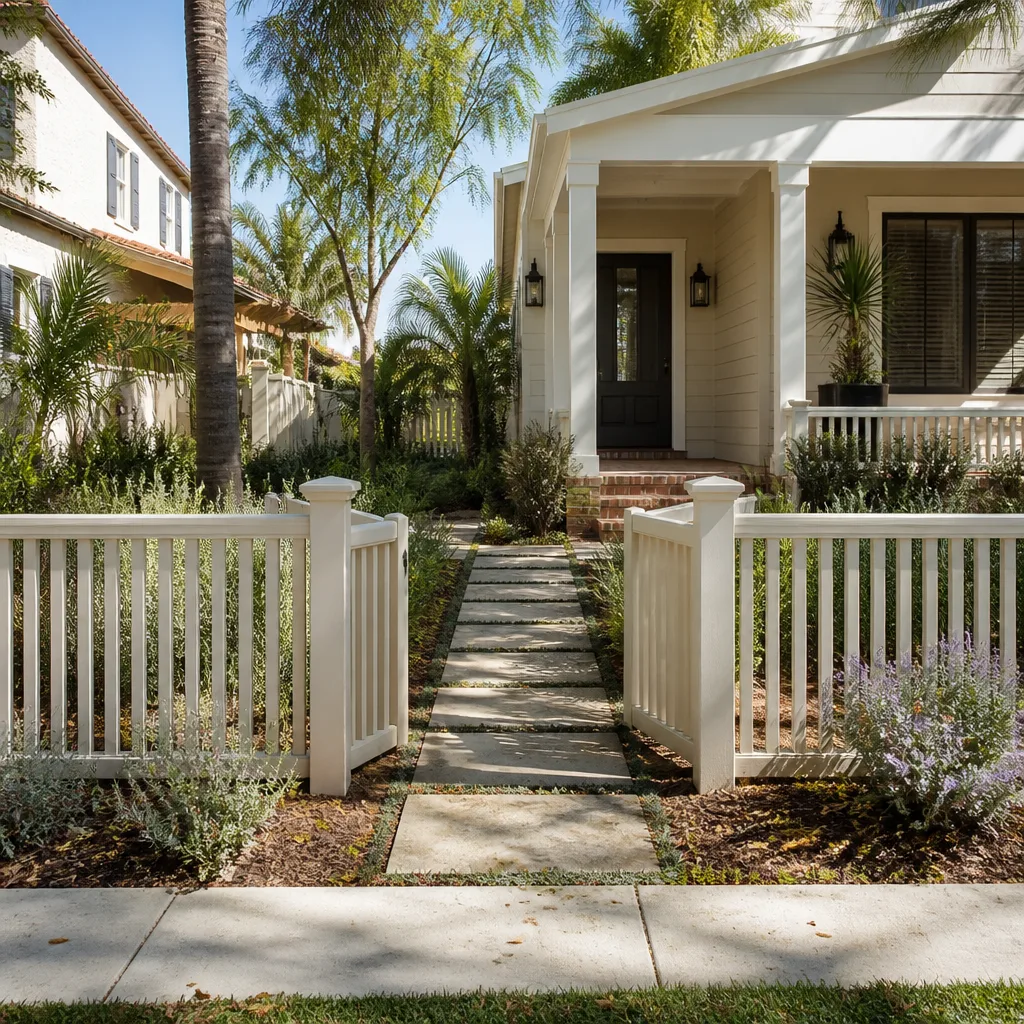
A Hayward fence is a code decision before it’s a material decision. Get the three regulatory systems straight – Hayward zoning height measured from highest adjacent grade, Alameda County setback expectations, and Civil Code 841 shared-cost rules – and the material and cost questions resolve cleanly. Skip any one of the three and you’re looking at corrections, disputes, or a tear-down. Get the post depth right in clay, insist on a written bid with named species and specified concrete, and confirm your zone with the City before anyone digs. A fence that passes on all three systems is a fence you won’t redo. Call (866) 863-1729 to schedule your free estimate in Hayward – the number in writing, before anyone picks up a tool.
Written by the team at Rowan Construction Group Hayward.
See the difference
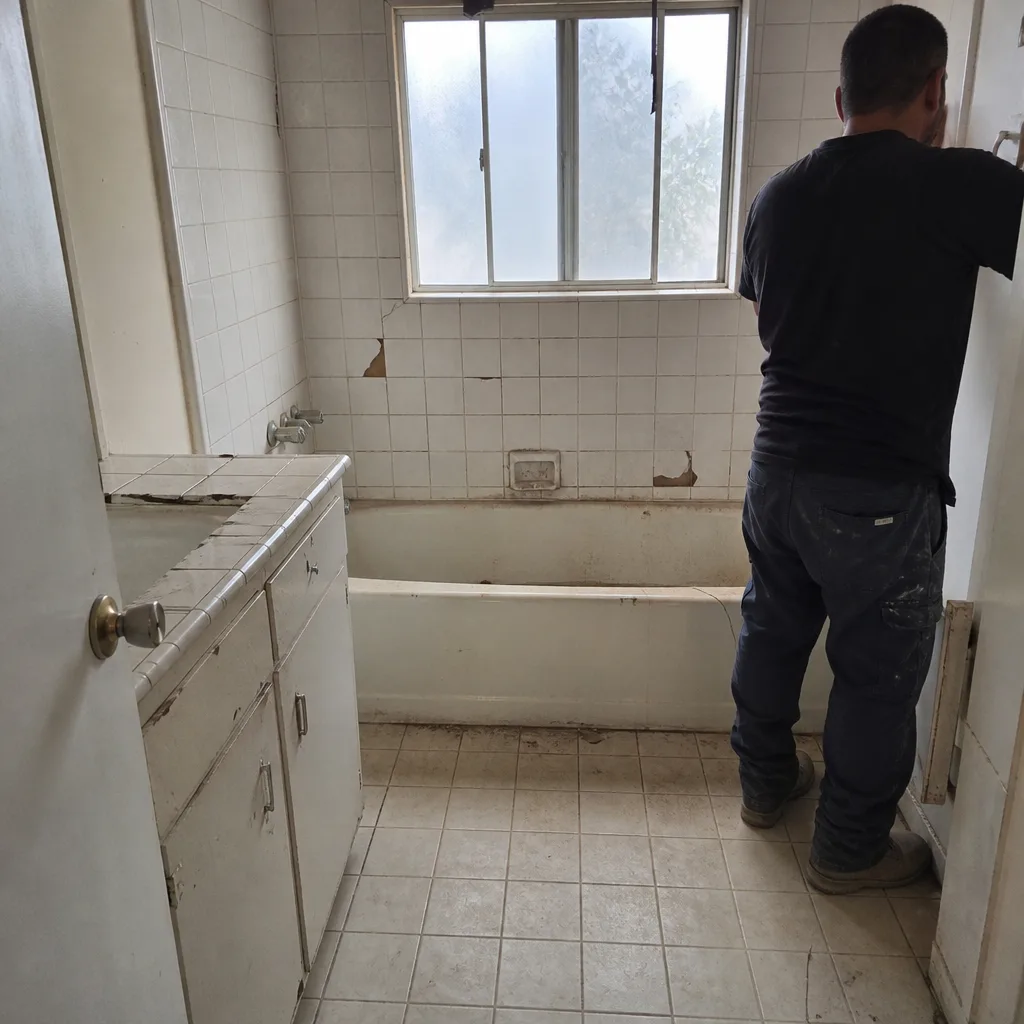 Before
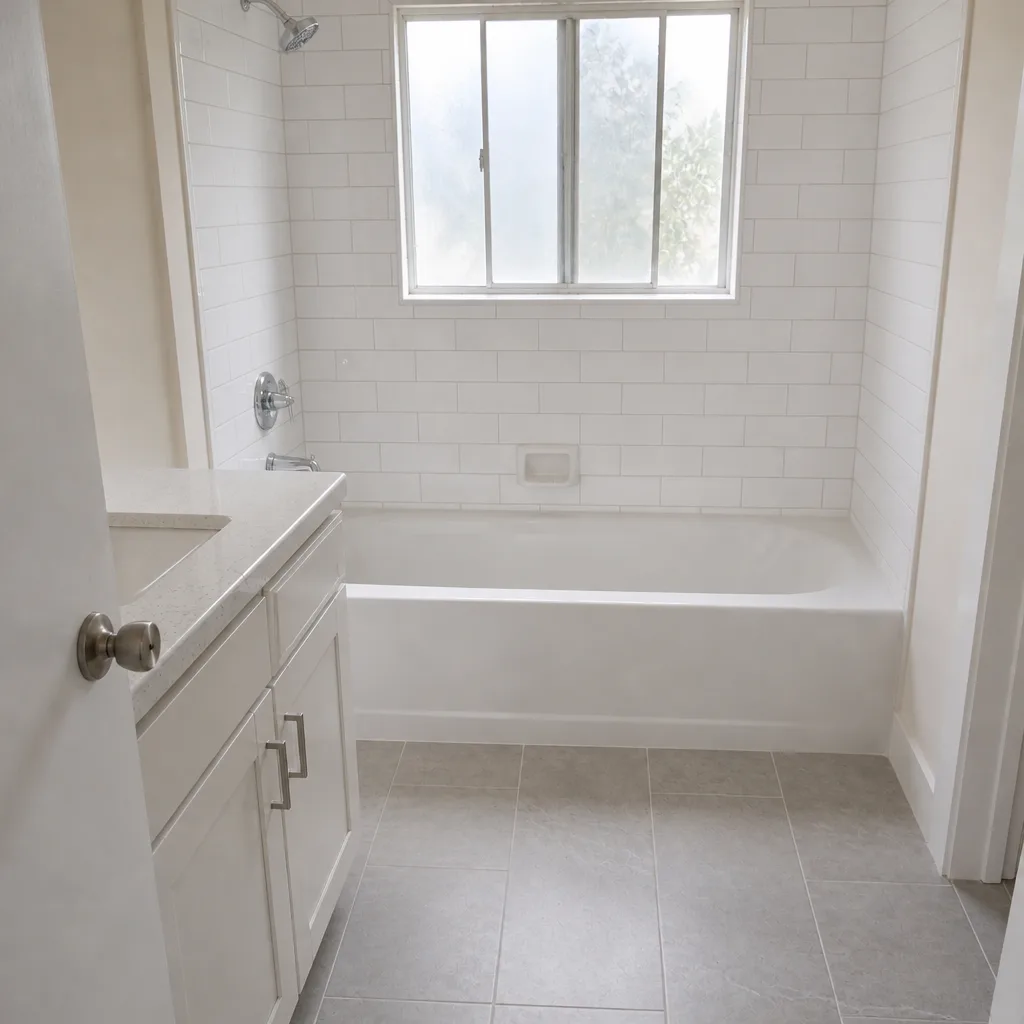 After
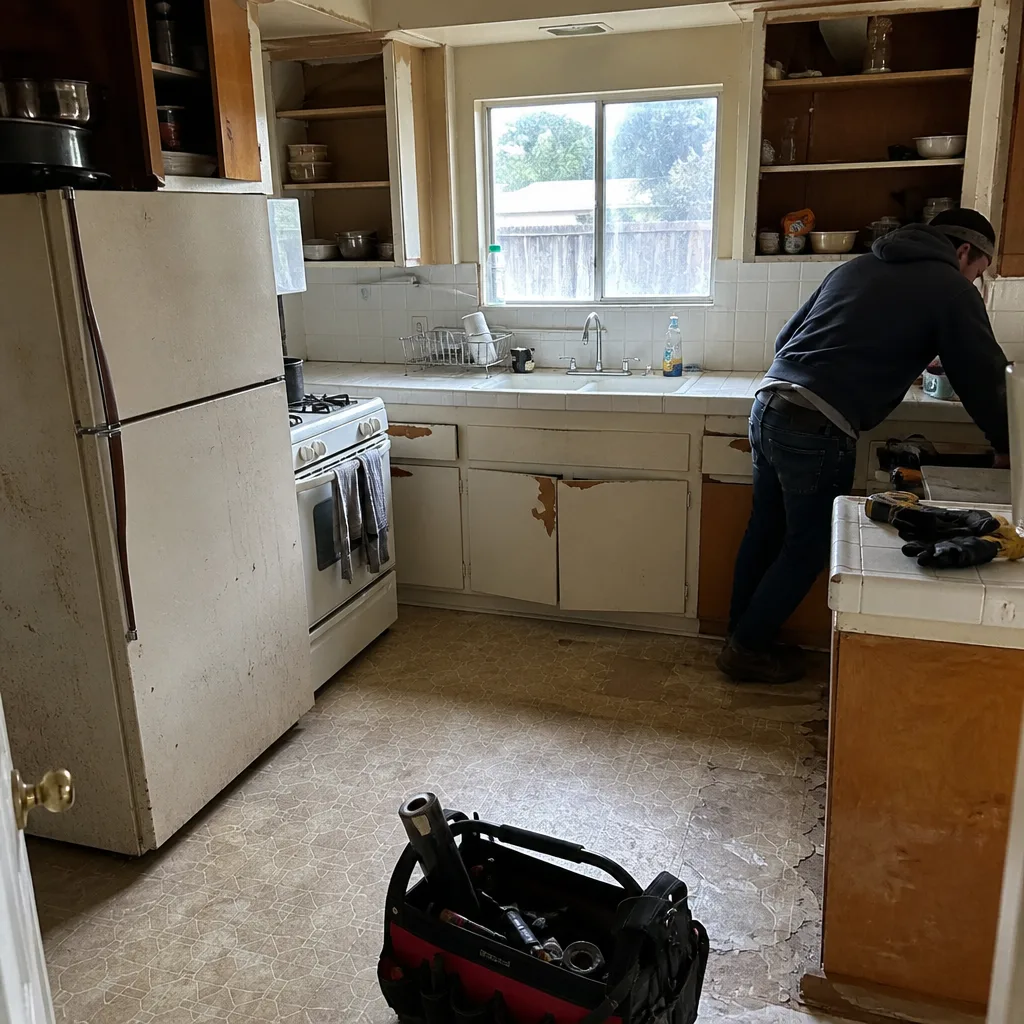 Before
 After
 Before
 After