Last updated November 18, 2026
Free written scope consultation - allowances, timeline, and change-order rules on paper before a single trade is scheduled
How Long Does Windows & Doors Take? Timelines and What to Expect
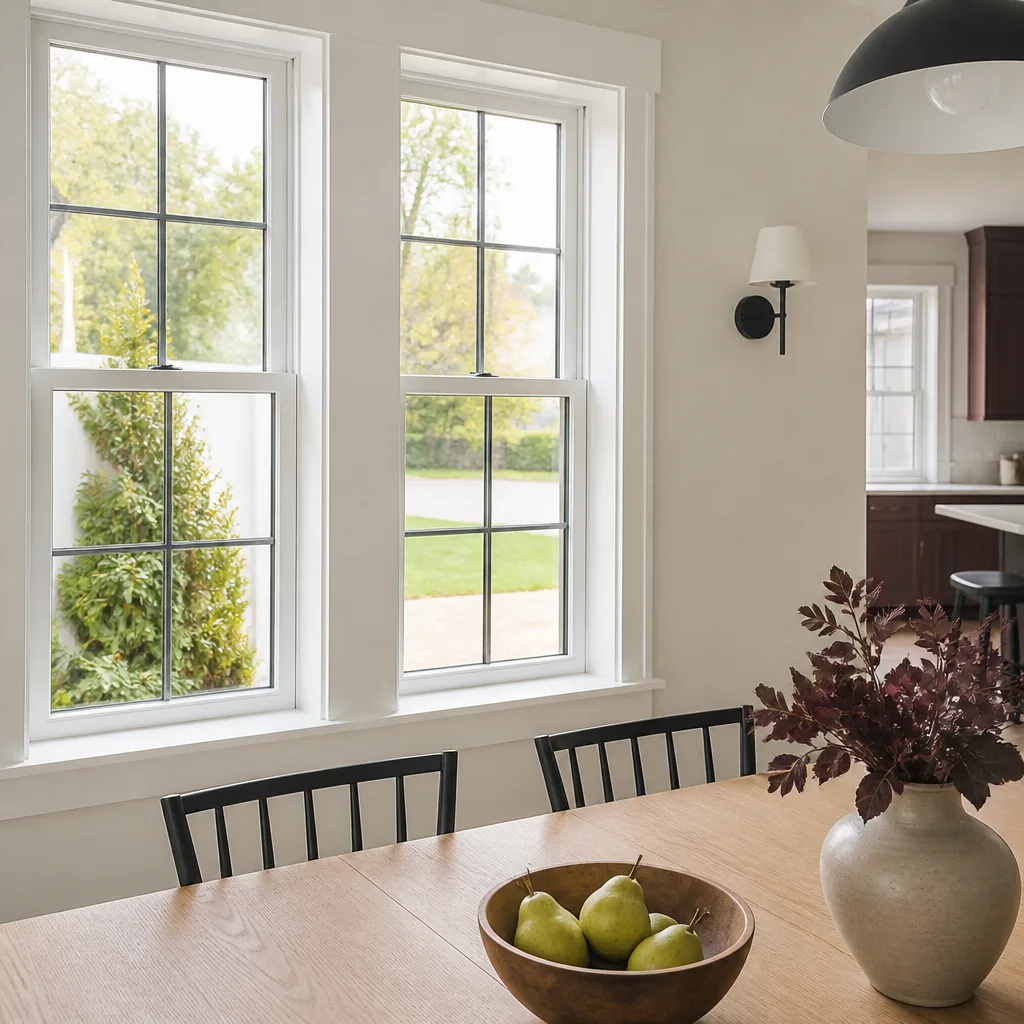
A crew can physically replace all ten windows in a 1,500-square-foot Hayward house in two working days. The project still takes 6 to 10 weeks from contract signing. Almost all of that gap is manufacturing and shipping lead time, not labor. A single window installs in 2 to 4 hours; the window you order today may not arrive for 4 to 8 weeks. Most window contractors disclose this timing only after the contract is signed. This guide separates installation hours from total calendar time, and explains which decisions shorten the schedule and which stretch it.
Quick Answer
Window replacement installation labor runs 2 to 4 hours per window, and a full ten-window home is typically two working days on site. Total elapsed project time is 6 to 10 weeks for stock vinyl insert windows and 10 to 18 weeks for custom or clad products, because manufacturing lead times run 1 to 3 weeks for stock and 8 to 14 weeks for specialty. Exterior door replacement adds 6 to 12 weeks of procurement to any project. Permits and inspection closeout add 2 to 4 weeks of calendar time around the installation itself.
Styles & brands we work with
- Kitchen remodeling
- Bathroom remodeling
- Home additions & ADU
- Roofing
- Windows & doors
- Driveway & pavers
- Fence
Table of Contents
- Installation Hours vs. Total Project Time
- Lead Times by Product Category
- Permit Timelines in Hayward and Alameda County
- The Installation Sequence for a Whole-Home Project
- What Homeowners Control Before the Crew Arrives
- Inspection and Closeout After Installation
- The Decisions That Compress or Extend the Schedule
Installation Hours vs. Total Project Time
The single most useful distinction in window and door planning is between labor hours and calendar time. They are not the same number, and confusing them is why homeowners feel blindsided when a two-day install turns into a three-month wait.
Installation labor is the time a crew is physically on site. That number is small and predictable:
- Stock vinyl insert window: 2 to 3 hours per unit, including interior trim work.
- Custom or oversized insert window: 3 to 4 hours per unit.
- Full-frame replacement window: 4 to 6 hours per unit, because the frame, flashing, and rough opening are rebuilt.
- Exterior entry door: 4 to 6 hours, plus trim and threshold work.
- Patio slider or French door: 5 to 8 hours, depending on the rough opening and any framing changes.
Multiply by unit count and you get the on-site figure. Ten stock inserts, installed in one mobilization, land at roughly 20 to 30 crew hours, or two working days for a two-person crew.
Calendar time is everything else. That includes measurement and order verification, factory manufacturing, freight, permit application and issuance, inspection scheduling, and final documentation. In Hayward, the calendar is dominated by procurement. The installation labor is a rounding error next to the lead time.
Lead Times by Product Category
Lead times are the project. Here is what we see across product categories, expressed as the span from signed order to material on site:
- Stock vinyl insert windows: 1 to 3 weeks. These are standard sizes carried in distributor inventory.
- Custom-sized vinyl or fiberglass insert windows: 4 to 8 weeks. Every unit is built to the measured opening.
- Wood-clad or aluminum-clad specialty windows: 8 to 14 weeks. Cladding, finish, and hardware selection all add steps at the factory.
- Custom exterior doors: 6 to 12 weeks. Door slabs, sidelites, and finish hardware ship on separate schedules, and the slowest item controls the install date.
- Garage doors and specialty entry systems: 4 to 10 weeks, dependent on size and finish.
Two factors move a project within these ranges. The first is custom versus stock sizing. A stock-size insert can shave 3 to 5 weeks off a project, but only if the existing openings actually match stock dimensions, which in Hayward’s older housing stock they often do not. The second is domestic versus imported manufacturing. Domestic fiberglass and vinyl lines generally hold tighter to the quoted range; imported or specialty-finish lines are more exposed to freight variability.
When our team quotes a window or door project through our Rowan Construction Group Hayward home service, we name the lead time next to each line item so the schedule is visible before anyone signs.
Permit Timelines in Hayward and Alameda County
Window replacement permitting in Hayward depends on scope. Like-for-like replacement in the same opening with the same dimensions usually qualifies for an over-the-counter or simplified review. Changing the size of an opening, adding a new opening, or altering the structural frame triggers a fuller plan review.
Realistic timelines for the permit portion:
- Same-size replacement: 1 to 3 weeks from application to issuance, depending on submittal completeness and current counter volume.
- Size change or new opening: 4 to 8 weeks, because structural review and possibly a Title 24 energy calculation are involved.
- Exterior door replacement in the same opening: 1 to 3 weeks, similar to same-size windows.
The schedule-saving move is concurrency. The permit application can be submitted while windows are in manufacturing, because the two processes do not depend on each other. A homeowner who waits for the permit to be approved before ordering material adds the two timelines end to end instead of running them together. On a custom clad window project, that single sequencing error can add 6 weeks. Ask your contractor to confirm the order date and the permit submittal date in writing; both should be visible on the same schedule.
The Installation Sequence for a Whole-Home Project
Whole-home window projects are typically done in a single mobilization rather than phased room by room. One mobilization means one setup, one protection phase, one cleanup, and one inspection. It also keeps the crew from re-establishing work zones multiple times.
A typical sequence:
- Day-of arrival and walkthrough: crew confirms unit count against the written scope and photographed openings.
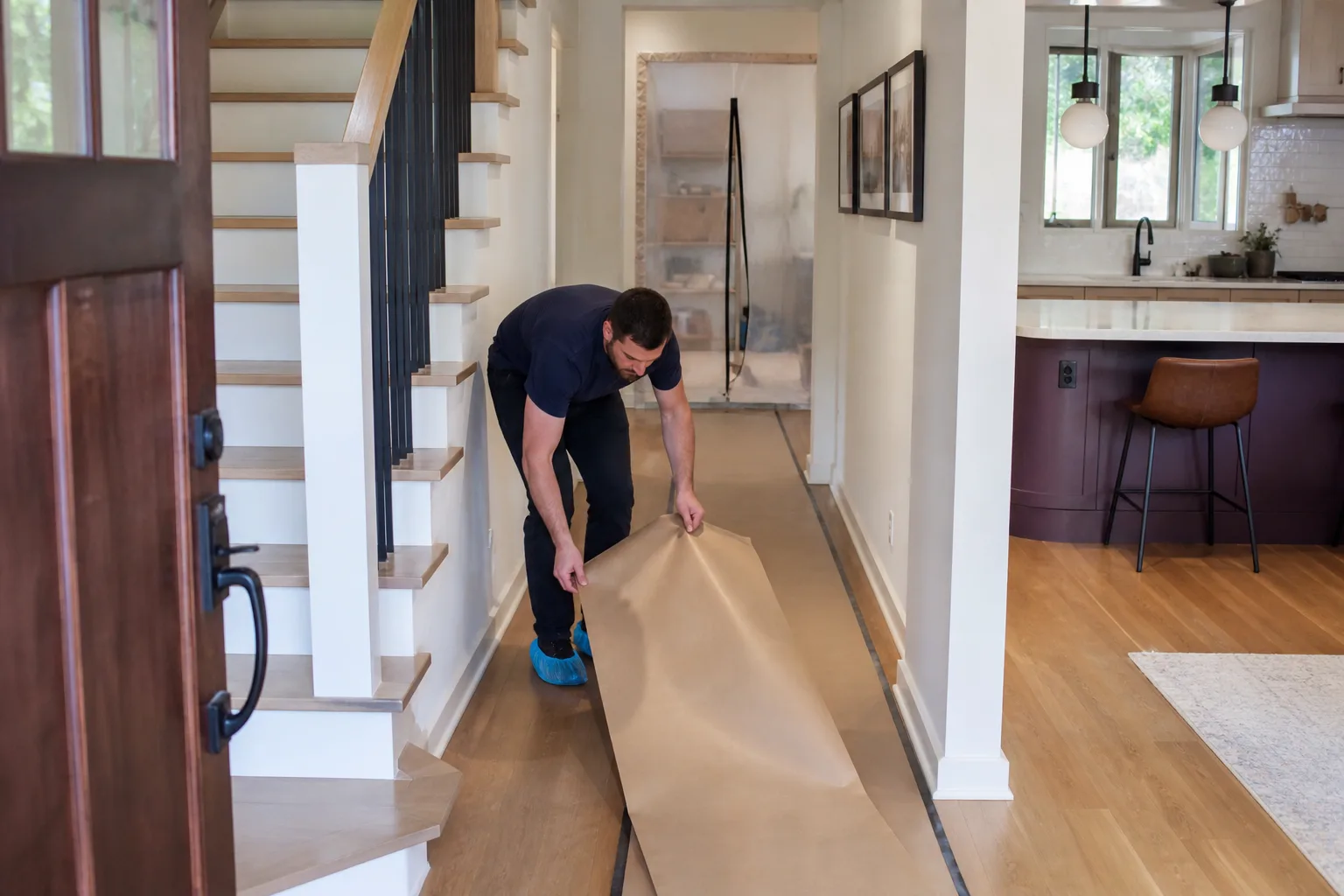
- Interior protection: drop cloths, corner guards on trim, furniture moved back per the clearance instructions.
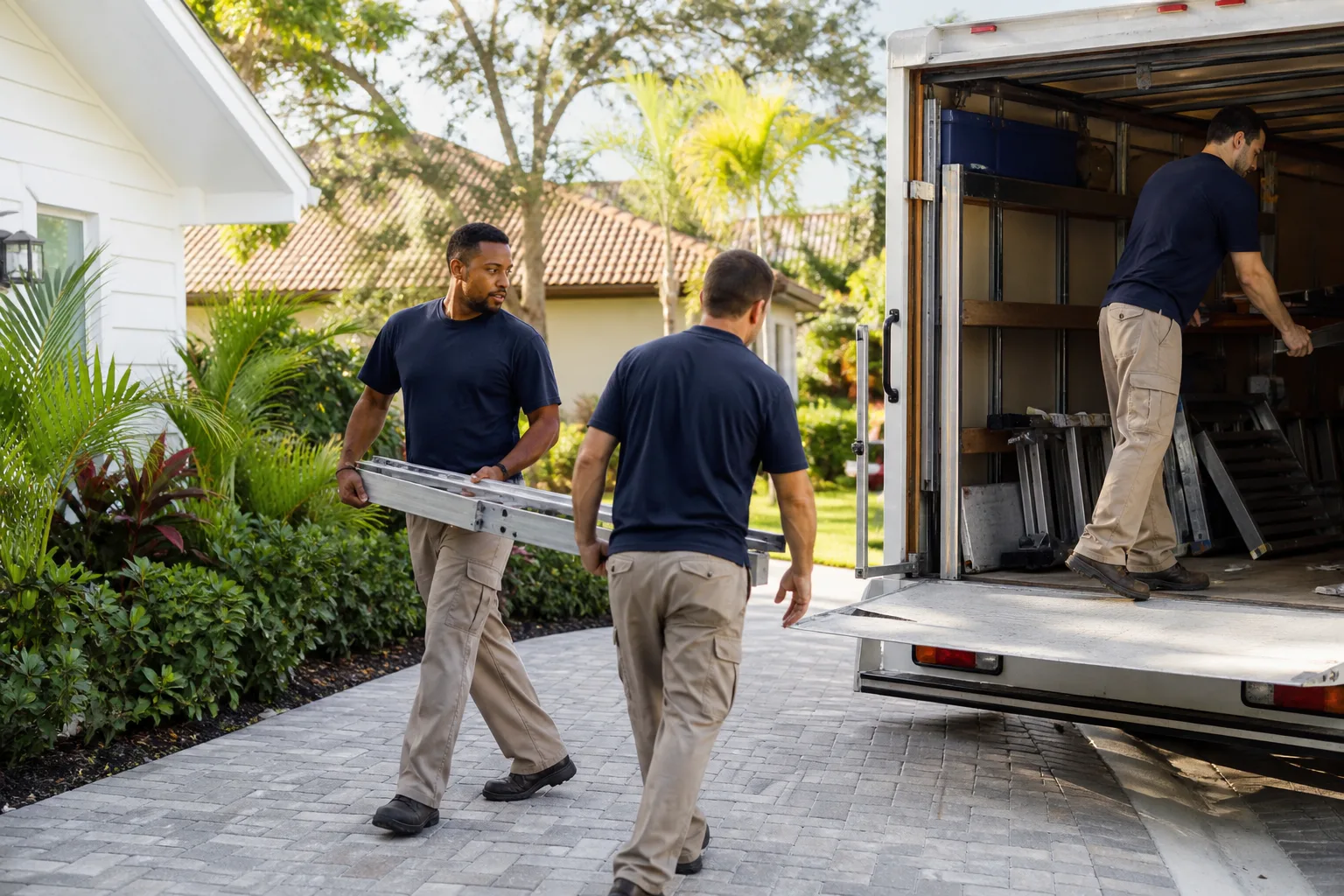
- Exterior access setup: ladders and staging positioned at each elevation.
- Removal and installation, elevation by elevation: windows are pulled, the opening is inspected for rot or flashing failure, and the new unit is set, shimmed, insulated, and sealed.
- Interior trim and finish work: trim reinstalled or replaced, gaps sealed, hardware installed.
- Daily cleanup: debris removed at the end of each workday, not just at the end.
- Photo record and walkthrough: documented photos of each opening and the finished install, reviewed with the homeowner.
Daily completion rate for a two-person crew runs 5 to 7 stock insert windows per day, or 3 to 4 full-frame units per day. A ten-window insert project finishes in two days; the same count in full-frame work takes three to four days.
What Homeowners Control Before the Crew Arrives
Several schedule factors sit entirely on the homeowner side, and getting them right can save a day of labor and a week of rescheduling:
- Interior furniture clearance: move furniture 4 to 6 feet back from each window wall. Crews do not move heavy furniture, and a room blocked at 8 a.m. becomes a wasted trip.
- Wall access: remove curtains, blinds, and wall hangings from window walls before arrival. This is 20 minutes of homeowner work that saves an hour of crew time per room.
- Exterior access: clear the ground along each elevation. Planters, patio furniture, and stored items at the window line slow staging and add risk.
- Alarm and sensor coordination: if window sensors or alarm contacts are mounted, decide in advance how they’ll be temporarily removed and re-hung.
- Pet and access logistics: confirm which rooms stay closed and how the crew enters and exits.
- Selection sign-off: sign off on color, hardware, and grid pattern before the order is placed, not after. A finish change after the order ships can reset the lead time.
We send a written preparation checklist with every scheduled install, plus a documented photo record of the openings when the crew measures, so the material arriving on site matches what the homeowner agreed to.
Inspection and Closeout After Installation
Installation finishing does not mean the project is closed. The final permit inspection and document closeout usually add 1 to 3 weeks, and until they are complete the project is not officially done for warranty and documentation purposes.
A final sign-off typically requires:
- All permitted units installed and visible for the inspector.
- Flashing and weather-sealing visible at the exterior perimeter of each opening.
- Interior trim complete and finished.
- Posted permit card with inspection stamps.
- Manufacturer labels and NFRC stickers still visible on the glass at the time of inspection; removing them early can delay sign-off.
After the inspection passes, the closeout package is what matters: the signed permit card, the manufacturer’s written product warranty, and the contractor’s written workmanship warranty. Keep all three together. If a window reveals a sealing or flashing issue six months later, the closeout documents establish what was installed and who is responsible.
The Decisions That Compress or Extend the Schedule
Four decisions control whether a window project runs 6 weeks or 16:
- Stock versus custom sizing. Stock trim replaces 3 to 5 weeks of procurement; custom sizing preserves the existing look but adds that span. Measure first, then decide.
- Insert versus full-frame replacement. Insert installations leave the existing frame in place and install faster (2 to 4 hours per unit) and with less finish disruption. Full-frame replacement is 4 to 6 hours per unit and includes rebuild of the rough opening, but it is the right call when the existing frame has rot or flashing failure. On Hayward’s older housing stock, particularly in the neighborhoods near the hills where moisture exposure is higher, hidden frame damage is common.
- Door timing. A custom exterior door will routinely outrun every window order. If the door is on the same project, order it first, or handle it as a second phase to avoid holding up the window install.
- Finish decisions before order. Clad window finish, grid pattern, and hardware are committed at order time. Late finish changes reset the factory clock.
Our technicians have up to 19 years of experience with these trade-offs, and we write the lead time, the install duration, and the permit date onto the same schedule so the sequence is easy to verify. When projects touch other trades (fence, pavers, or additions), we sequence them explicitly; see Fence Installation in Hayward and Driveway & Pavers in Hayward for how we handle those timelines.
Common Mistakes to Avoid
- Ordering material before the permit is submitted. Run the two in parallel, not in sequence. A sequential approach can add 4 to 8 weeks that you never see reflected in the quote.
- Choosing a contractor before the lead time is in writing. If the schedule shows only an install date and not the material arrival date, the timeline is incomplete.
- Skipping the measurement walkthrough. Ordering from homeowner measurements instead of a contractor’s measured openings is the most common cause of a returned or recut unit, which resets the lead time.
- Removing NFRC stickers before final inspection. Those stickers are the inspector’s verification that the installed unit matches the permitted product.
- Clearing only the interior walls. Exterior access is just as critical. A stuffed planting bed along the window line slows the install and creates falls risk for the crew.
- Leaving furniture in place on day one. A crew cannot safely work around a bed pushed to the wall, and the lost hours are billable.
- Booking other trades against the same week. Roofing, siding, or interior painting scheduled in the same window as the install is a scheduling collision. Sequence trades instead of overlapping them. See Home Additions & ADU in Hayward for how larger projects stage these dependencies.
See the difference
 Before
 After
 Before
 After
 Before
 After
When to Call a Professional
Call a professional if the project is more than one or two windows in a wall, if any opening shows rot, soft trim, or visible daylight through the frame, or if the existing window is a full-frame candidate rather than an insert. Call if a door replacement involves a threshold change or new rough opening. Stop and call if your current window drafts heavily or the frame has separated from the wall; that is not a schedule question, it is a structural one.
A written scope and a written price matter most when a project touches framing. If the plan is clearly in your head but not on paper, that is the moment to get a quote. Rowan Construction Group Hayward offers free estimates in Hayward; call (866) 863-1729 to schedule yours. Our written quote includes the installation duration, the material lead time, and the permit schedule side by side so the calendar is visible from day one. If you already have a competing estimate, we’ll review it line by line at no charge.
Frequently Asked Questions
Total elapsed time from signed contract to final inspection is typically 6 to 10 weeks for stock vinyl insert windows, and 10 to 18 weeks for custom clad windows. Installation labor itself is only 2 to 4 hours per window, or about two working days for a ten-window home. Material lead time and permit review fill the rest of the calendar.
Yes. Stock-size insert windows reduce procurement from the 4 to 8 week custom range to 1 to 3 weeks, saving 3 to 5 weeks of calendar time on a typical project. The catch is that stock sizing only works if the existing openings match standard dimensions; in Hayward’s older housing stock, they often don’t. A measured walkthrough tells you quickly which is realistic.
Custom exterior doors run 6 to 12 weeks from order to site arrival, and often outlast every window in a combined project. Door hardware, sidelites, and finish options each ship on separate schedules, so the slowest component controls the install date. If the door is on the same project as the windows, order it first.
Permitting for same-size replacement typically adds 1 to 3 weeks. The permit review can run at the same time as material procurement, so it usually doesn’t add to the total project length unless the application was submitted late or the review used a fuller review path for a size change. Ask to see both the permit submittal date and material order date on the project schedule.
Insert installations can proceed in light rain with proper protection, but heavy rain, high wind, or cold temperatures below the sealant’s rated range will pause the work. In Hayward, the reliable window for installation runs late spring through early fall; a winter install can lose 1 to 3 days to weather rescheduling. Full-frame projects are more weather-exposed because the rough opening stays open through the install.
The project is complete when the final permit inspection passes and you have three documents in hand: the signed permit card, the manufacturer’s product warranty, and the contractor’s written workmanship warranty. Until those exist, the project is not done for warranty or documentation purposes, even if the last window is installed. Ask for all three at closeout; the written price is one document, and the closeout package is another.
The Bottom Line
Installation labor and project calendar are different numbers, and the calendar is driven by procurement, not by how fast a crew works. Stock vinyl inserts run 6 to 10 weeks total; custom clad windows run 10 to 18. Doors add 6 to 12 weeks on their own. Permits in Hayward add 1 to 3 weeks, and closeout inspection adds another 1 to 3. Ask for the lead time in writing next to each line item, submit the permit application while material is in manufacturing, and hold finish decisions to before the order is placed. Do those three things and the schedule you’re quoted is the schedule you’ll get. Call (866) 863-1729 for a free estimate and a written schedule that shows every step.
Written by the team at Rowan Construction Group Hayward.